
Ninjutsu Gi Guide — How to Choose the Right Training Uniform
Japanese Ninjutsugi, Black Karategi, Cotton Canvas No. 10 and No. 11, Traditional Manufacturers, Sizing and Training Performance
Choosing the right Ninjutsu Gi (Ninjutsugi — 忍術着) is an important decision for practitioners of Japanese Ninjutsu and Ninpō Taijutsu.
A training uniform must do more than provide the traditional appearance associated with Japanese martial arts.
It should allow natural body movement, comfortable postures, repeated training and appropriate interaction with partners and the surrounding environment.
In Japan, many black uniforms used by Ninjutsu practitioners are manufactured or classified as Black Karategi (黒空手衣) or Black Dōgi (黒道衣).
These uniforms may feature traditional cotton canvas fabrics, including No. 10 canvas (10号帆布) and No. 11 canvas (11号帆布).
Japanese manufacturers such as Tokaido, Tokyodo, Shureido, Hirota, Isami, Mitsuboshi and Meirin have contributed to the production and development of Japanese martial arts uniforms.
However, not every Karategi is suitable for every form of Ninjutsu training, and not every manufacturer offers the same black cotton models.
This comprehensive Bujindō guide explains how to choose a practical Ninjutsu training uniform, understand Japanese cotton canvas, compare traditional manufacturing approaches, select the correct size and maintain your uniform properly.
Quick Answer: What Is the Best Ninjutsu Gi?
The best Ninjutsu Gi is a correctly fitted martial arts uniform that provides freedom of movement, durability, comfort and suitability for the practitioner's training.
For traditional Japanese cotton uniforms, No. 10 canvas (10号帆布) generally represents a thicker, heavier fabric, while No. 11 canvas (11号帆布) is commonly used for medium-weight uniforms.
A No. 11 cotton uniform may offer a useful balance between flexibility and durability for regular Ninpō Taijutsu practice.
A No. 10 uniform may appeal to practitioners who prefer a heavier and more structured garment.
The correct choice depends on the fabric, cut, fit, training conditions and individual preferences.

1. What Is a Ninjutsu Gi (Ninjutsugi)?
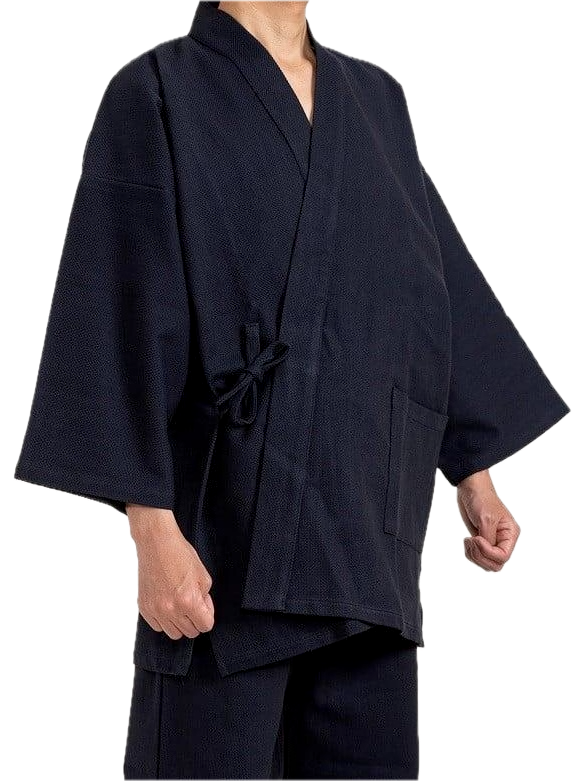
A Ninjutsugi (忍術着) is a martial arts training uniform used by practitioners of Ninjutsu.
It generally consists of a jacket and trousers, accompanied by a training belt when required.
Depending on the school, manufacturer and intended purpose, a Ninjutsugi may resemble a traditional Japanese Karategi or incorporate clothing features associated with other martial arts.

Ninjutsu Gi vs Karategi
The Japanese term Karategi (空手着・空手衣) refers to a uniform manufactured for Karate practice.
The term Ninjutsugi describes a uniform used for Ninjutsu.
Although their intended disciplines are different, some black cotton Karategi are also used by Ninjutsu practitioners.
This practical overlap explains why certain uniforms sold internationally as Ninjutsu Gi may appear in Japanese manufacturers' catalogs under the designation Black Karategi.
However, classification alone does not establish that a uniform is suitable for every Ninjutsu training method.

Ninjutsugi vs Shinobi Shōzoku
A Ninjutsugi is primarily associated with regular martial arts training.
A Shinobi Shōzoku (忍び装束) commonly refers to traditional-style ninja clothing, which may include additional garments and accessories.
Both can be used in certain training environments, but their construction and practical characteristics must be evaluated individually.
Read our Traditional Ninja Gear vs Modern Martial Arts Equipment Guide for a detailed comparison.
2. Why Japanese Black Karategi Are Used for Ninjutsu
Japan has a long-established martial arts uniform industry, with manufacturers specializing in Karate, Jūdō and other Japanese disciplines.
Some manufacturers produce black cotton Karategi that may also meet the practical requirements of certain Ninjutsu practitioners.
These uniforms are often available in different fabric weights, cuts and sizes.
Black Karategi (黒空手衣)
The expression Kuro Karategi (黒空手衣) literally refers to a black Karate uniform.
In Japanese catalogs, these garments may be described as:
- 黒空手衣 — Black Karate uniform.
- 黒道衣 — Black martial arts uniform.
- 厚手 — Heavyweight or thick fabric.
- 中厚 — Medium-weight fabric.
- 綿100% — 100% cotton.
- 10号帆布 — No. 10 cotton canvas.
- 11号帆布 — No. 11 cotton canvas.
These Japanese descriptions provide useful technical information when comparing different uniforms.
Why Construction Matters More Than the Label
A uniform described as a Karategi may be suitable for Ninjutsu when its construction allows the required body movements.
Conversely, a garment marketed as a ninja uniform may not provide adequate comfort or durability for regular Taijutsu.
Choose a uniform according to its fabric, cut, mobility, construction and intended use — not simply because it is labeled Karategi, Ninjutsugi or Ninja Gi.
3. What Makes a Good Ninjutsu Training Uniform?
Ninpō Taijutsu requires a wide range of body movements that place different demands on martial arts clothing.
Freedom of Movement
The jacket must allow comfortable shoulder movement, arm extension and rotation.
The trousers must provide sufficient room for the hips, knees and thighs.
This is particularly important when practicing low postures, turning, kneeling and changing direction.
Durable Fabric and Stitching
Repeated training may involve friction, contact with the ground, partner exercises and continuous changes of posture.
The quality of the fabric, seams and reinforcement points should therefore be examined carefully.
Comfort During Ukemi
Ukemi (受身) involves controlled falling and rolling.
A suitable uniform should allow these movements without unnecessary restriction.
Excessively rigid fabric, poor sizing or uncomfortable seams may interfere with training.
Appropriate Weight
Heavier uniforms can provide a substantial feel and structured appearance.
Medium-weight uniforms may be easier to move in and more comfortable during prolonged practice.
Neither category is universally superior.
Suitable Cut
The cut of the jacket and trousers is just as important as the material.
A high-quality fabric cannot compensate for a uniform that restricts the hips, shoulders or knees.
4. Understanding Japanese Cotton Canvas — 帆布 (Hanpu)
Traditional Japanese martial arts uniforms may be manufactured using cotton canvas known as Hanpu (帆布).
Canvas is a woven textile valued for its structure and durability.
Japanese manufacturers use different canvas classifications to describe particular fabrics.
What Does 10号帆布 Mean?
The expression 10-gō Hanpu (10号帆布) refers to a Japanese canvas classification.
In traditional martial arts uniform catalogs, No. 10 canvas is commonly associated with thick, heavyweight cotton uniforms.
What Does 11号帆布 Mean?
The expression 11-gō Hanpu (11号帆布) refers to another canvas classification.
In the Japanese Karategi market, No. 11 canvas is commonly associated with medium-weight cotton uniforms.
Does the Canvas Number Equal the Fabric Weight?
No.
The Japanese canvas number should not be interpreted as a direct measurement in grams per square meter or ounces per square yard.
The actual fabric weight depends on the manufacturer, weave, yarn and textile finishing process.
Consequently, a No. 10 or No. 11 designation should not automatically be converted into a specific GSM value.
Important Technical Distinction
In the traditional Japanese Karategi classifications discussed in this guide, No. 10 canvas is generally heavier than No. 11 canvas.
However, exact fabric weight and performance must be checked against the specifications of the individual manufacturer.
5. No. 10 vs No. 11 Cotton Canvas — Which Is Better for Ninjutsu?
The choice between 10号帆布 and 11号帆布 is particularly relevant when purchasing a traditional Japanese black cotton uniform.
| Characteristic | No. 10 Canvas | No. 11 Canvas |
|---|---|---|
| Japanese Name | 10号帆布 | 11号帆布 |
| Typical Classification | Heavyweight | Mediumweight |
| Fabric Structure | Generally thicker | Generally less thick |
| Initial Flexibility | May feel relatively stiff | Often more flexible |
| Traditional Karate Use | Frequently associated with Kata uniforms | May be used for Kata and Kumite |
| Ninjutsu Application | For practitioners preferring structured clothing | Potentially suitable for regular Taijutsu training |
| Warm-Weather Comfort | May feel warmer | May offer improved comfort |
| Drying Time | Often longer | Often shorter |
Advantages of No. 10 Cotton Canvas
Heavyweight No. 10 cotton canvas may appeal to practitioners who prefer a robust, substantial uniform.
Its structure can provide a traditional martial arts appearance.
However, heavyweight cotton may require time to soften through regular use and washing.
Advantages of No. 11 Cotton Canvas
Medium-weight No. 11 canvas may provide a useful compromise between durability, structure and freedom of movement.
For Ninpō Taijutsu, this can be beneficial during repeated postural changes, ground movements and prolonged training.
Which Canvas Should You Choose?
For many practitioners, a well-constructed No. 11 cotton uniform can be a practical choice for regular training.
A No. 10 uniform may be preferred by practitioners who value a heavier, more substantial feel.
However, fabric weight alone does not determine durability or martial arts performance.
Always consider the complete garment construction, manufacturer specifications and personal preferences.
6. Traditional Japanese Manufacturers — Understanding Black Karategi and Ninjutsugi
Several established Japanese martial arts manufacturers offer cotton Karategi with different fabric weights, cuts and constructions.
Some produce confirmed black models, while others are particularly useful for understanding Japanese uniform-making techniques.
The following overview distinguishes documented black models from other traditional cotton Karategi references.

Tokyodo (東京堂) — KB-10 and KB-11
Tokyodo is a Japanese martial arts uniform manufacturer offering black cotton Karategi in two documented canvas categories.
KB-10: Black heavyweight Karategi manufactured using No. 10 cotton canvas.
KB-11: Black medium-weight Karategi manufactured using No. 11 cotton canvas.
Both models are described as 100% cotton uniforms.
Tokyodo indicates approximately 5% shrinkage and warns that the black dye may fade or develop uneven coloration during washing.
These models provide a useful direct comparison between No. 10 and No. 11 black cotton uniforms.

Shureido (守礼堂) — KB-10
Shureido is a recognized Japanese Karate equipment manufacturer.
Its black KB-10 Karategi is described as a heavyweight cotton uniform.
The manufacturer identifies the fabric as 100% cotton and refers to traditional Yamato-bō textile.
This model illustrates the substantial construction associated with heavyweight Japanese cotton uniforms.
Isami (イサミ) — KB-110
Isami manufactures a variety of Japanese martial arts equipment.
The KB-110 is a documented black Karategi manufactured using No. 11 cotton canvas.
Its specifications include:
- Black color.
- 100% cotton.
- No. 11 canvas.
- Pre-shrinkage treatment.
- Japanese manufacture.
- Jacket and trousers.
The KB-110 should not be confused with the KB-11 manufactured by Tokyodo.

Tokaido (東海堂)
Tokaido is an established Japanese Karate uniform manufacturer associated with traditional martial arts clothing.
Certain black traditional-style Karategi models, including versions associated with the Kongō name, have been offered in Japan.
When evaluating a Tokaido uniform for Ninjutsu, check the exact model, fabric classification, cut and current availability.

Hirota (ヒロタ)
Hirota provides useful technical references for Japanese cotton Karategi construction.
Its MH-10 is described as a thick No. 10 canvas uniform, while the MH-11 uses medium-weight No. 11 canvas.
Hirota describes the MH-10 as particularly suited to Kata practice.
The MH-11 is presented as suitable for both Kata and Kumite.
These fabric specifications provide an important comparison, but black availability must be verified for the individual model.

Mitsuboshi (ミツボシ)
Mitsuboshi is a Japanese martial arts equipment manufacturer associated with traditional uniform production.
Its Karate uniform ranges include different cotton fabric constructions.
Specific black models and canvas classifications should be verified against current product specifications.
Meirin (明倫)
Meirin is associated with Japanese martial arts uniforms and equipment.
Black heavyweight Karategi have appeared in Japanese product catalogs.
However, the exact canvas number should not be assumed unless explicitly documented for the individual product.
Important Manufacturer Comparison
Not all Japanese manufacturers use identical fabric specifications, size systems or model names.
The designation KB-10, KB-11 or KB-110 must always be interpreted in relation to the manufacturer.
Before purchasing, confirm the exact model, fabric composition, color, measurements and intended use.
7. Cotton vs Polyester — Which Material Is Better for a Ninjutsu Gi?
Ninjutsu uniforms may be manufactured using cotton, synthetic fibers or blended textiles.
Each material offers different practical characteristics.
100% Cotton Ninjutsugi
Cotton is widely used in traditional Japanese martial arts uniforms.
Its characteristics include:
- A natural textile feel.
- Good moisture absorption.
- Different available fabric weights.
- Traditional woven construction.
- Potential shrinkage after washing.
Cotton can absorb perspiration, but heavy cotton garments may take longer to dry.
Polyester and Synthetic Blends
Synthetic textiles may provide lighter weight, different drying characteristics and improved resistance to certain forms of shrinkage.
However, fabric performance depends on its construction, not simply its fiber content.
Which Material Should You Choose?
Practitioners interested in traditional Japanese cotton uniforms may prefer 100% cotton.
Those seeking lightweight or easy-care clothing may consider suitable synthetic or blended fabrics.
For demanding Ninpō Taijutsu, the decisive criteria remain comfort, movement, fit and durability.
8. How to Choose the Correct Ninjutsugi Size
Correct sizing is essential for comfortable martial arts practice.
Japanese uniform manufacturers commonly use numerical sizes associated with approximate body-height ranges.
However, there is no universal size conversion shared by every manufacturer.
Japanese Uniform Size Numbers
Japanese martial arts uniforms may use size designations such as:
- 1号 — Size 1.
- 2号 — Size 2.
- 3号 — Size 3.
- 4号 — Size 4.
- 5号 — Size 5.
- 6号 — Size 6.
Half sizes may also be available.
For example, a size 4 from one manufacturer may not have exactly the same garment measurements as a size 4 from another.
Measure Your Body
Before ordering, record the following measurements:
- Height.
- Chest circumference.
- Waist circumference.
- Hip circumference.
- Arm length.
- Inside leg length.
Check the Jacket
The jacket should allow full movement of the shoulders and arms.
It should remain comfortable when turning, bending or adopting different Kamae.
Check the Trousers
The trousers must allow the hips and knees to bend without restriction.
The crotch construction should accommodate wide movements and low postures.
Allow for Shrinkage
Some traditional cotton uniforms shrink during washing.
Tokyodo, for example, states approximately 5% shrinkage for its KB-10 and KB-11 models.
This figure must not be applied automatically to every Japanese uniform.
Always consult the manufacturer's specific care information.
Do not choose a Ninjutsugi using height alone. Check the garment measurements, fabric characteristics, possible shrinkage and the movement requirements of your training.
9. Choosing a Ninjutsugi for Indoor and Outdoor Training
Indoor Dōjō Practice
Indoor practice may include:
- Fundamental Taijutsu.
- Kamae training.
- Tai Sabaki.
- Ukemi.
- Partner exercises.
- Supervised weapon practice.
A suitable indoor uniform should provide comfortable movement and withstand repeated training.
Outdoor Ninjutsu Training
Outdoor practice introduces additional challenges, including uneven terrain, vegetation, seasonal temperatures and changing weather conditions.
The training uniform should allow natural movement without becoming unnecessarily restrictive.
During warm weather, heavyweight cotton may feel less comfortable.
During colder conditions, additional appropriate layers may be necessary.
However, fabric weight alone does not provide sufficient protection against cold or adverse weather.
Compatibility with Footwear
For outdoor training, suitable Jikatabi may be used when appropriate to the activity and terrain.
For indoor practice, follow the instructor's requirements concerning bare feet or approved footwear.
Explore our Japanese Jikatabi Collection .

10. Ninjutsugi for Togakure Ryū Ninpō Taijutsu
Togakure Ryū Ninpō (戸隠流忍法) is a Japanese martial tradition transmitted in modern times through the teachings of Hatsumi Masaaki (初見良昭), Sōke and founder of the Bujinkan organization.
The practice of Ninpō Taijutsu places particular importance on natural movement, body coordination and adaptability.
A suitable training uniform must support these requirements.
Kamae (構え)
The uniform must permit natural posture and changes of position.
Clothing should not restrict the shoulders, hips or knees.
Maai (間合い)
Distance management requires controlled stepping, balance and appropriate timing.
The trousers must allow comfortable changes of direction and stance.
Tai Sabaki (体捌き)
Tai Sabaki involves coordinated body movement.
Excessive fabric rigidity or poor garment fit may interfere with natural movement.
Ukemi (受身)
Rolling and falling require sufficient flexibility and a safe training surface.
The uniform should remain comfortable during repeated ground contact.
Shinobi Aruki (忍び歩き)
Controlled walking requires awareness, balance and coordinated movement.
The trousers should allow comfortable stepping without excessive fabric interfering with the legs.
Bujindō — Practical Training Perspective
From the perspective of traditional Ninpō Taijutsu, a uniform should never be selected solely for its appearance.
The practitioner must be able to move naturally, adapt posture, manage balance and perform technical movements without unnecessary restriction.
A good Ninjutsugi supports practice. It does not replace practice.
To learn more about Togakure Ryū Ninpō training in Kyoto, Japan, visit Ninjutsu Kyoto — Togakure Ryū Ninpō Dōjō .
11. Japanese Ninjutsugi and Black Karategi — Comparison Table
The following table summarizes selected Japanese uniform references and their documented fabric characteristics.
| Manufacturer | Model | Canvas | Black Version |
|---|---|---|---|
| Tokyodo | KB-10 | No. 10 heavyweight cotton | Confirmed |
| Tokyodo | KB-11 | No. 11 medium-weight cotton | Confirmed |
| Shureido | KB-10 | Heavyweight cotton canvas | Confirmed |
| Isami | KB-110 | No. 11 cotton canvas | Confirmed |
| Tokaido | Selected traditional models | Model-dependent | Check exact model |
| Hirota | MH-10 | No. 10 cotton canvas | Not verified |
| Hirota | MH-11 | No. 11 cotton canvas | Not verified |
| Mitsuboshi | Selected Karategi | Model-dependent | Not verified |
| Meirin | Selected heavyweight Karategi | Exact number not confirmed | Documented in Japanese catalogs |
This table is provided for technical and educational comparison. It does not indicate that every model is currently stocked by Bujindō. Specifications and availability may change.
12. How to Wash and Maintain a Black Cotton Ninjutsugi
Correct maintenance helps preserve the appearance, comfort and useful life of a martial arts uniform.
Wash According to the Care Label
Always follow the instructions provided by the manufacturer.
Traditional cotton fabrics may require particular care, especially during the first washes.
Wash Dark Uniforms Separately
Black cotton uniforms may release dye, particularly when new.
Washing separately helps avoid staining other garments.
Use Appropriate Water Temperature
Unless the care label states otherwise, cool water is often a sensible choice for dark cotton clothing.
Excessive heat may contribute to shrinkage or color changes.
Avoid Unnecessary Bleaching
Bleaching products can damage the color and appearance of black fabrics.
Use detergents compatible with the manufacturer's care instructions.
Dry Carefully
Avoid excessive heat unless permitted by the manufacturer.
Allow sufficient airflow and ensure the uniform is completely dry before storage.
Expect Natural Color Changes
Some traditional black cotton uniforms may gradually fade through washing and regular use.
Tokyodo specifically warns that its black-dyed KB-10 and KB-11 fabrics may experience color loss or uneven coloration.
These characteristics should be considered before purchasing.
13. Common Mistakes When Buying a Ninjutsu Gi
Mistake 1 — Choosing by Appearance Alone
A visually impressive uniform may not provide sufficient freedom of movement.
Fit and construction must take priority.
Mistake 2 — Confusing Canvas Numbers with GSM
Japanese No. 10 and No. 11 canvas classifications should not automatically be converted into fabric weight in grams per square meter.
Mistake 3 — Assuming Heavier Means Better
Heavyweight cotton is not automatically more appropriate for Ninpō Taijutsu.
Comfort and mobility must be evaluated.
Mistake 4 — Ignoring Shrinkage
Some cotton uniforms shrink after washing.
Always check the manufacturer's specific instructions.
Mistake 5 — Choosing the Wrong Size
Japanese size numbers vary between manufacturers.
Check actual measurements rather than relying on the numerical size alone.
Mistake 6 — Confusing a Costume with a Training Uniform
A traditional-style ninja outfit is not necessarily designed for demanding martial arts practice.
Evaluate the fabric, cut and construction.
14. Frequently Asked Questions About Ninjutsu Gi
What is a Ninjutsu Gi?
A Ninjutsu Gi, or Ninjutsugi, is a martial arts uniform used for contemporary Ninjutsu training. It generally consists of a jacket and trousers.
Can I use a black Karategi for Ninjutsu?
Yes, a suitable black Karategi may be used for Ninjutsu when its cut, fabric and construction meet the instructor's training requirements.
What is the difference between 10号 and 11号 cotton canvas?
In traditional Japanese Karategi classifications, No. 10 canvas is generally heavier and thicker than No. 11 canvas.
No. 11 is commonly used for medium-weight uniforms.
Is No. 11 cotton better for Ninjutsu?
No. 11 canvas may offer a useful balance between flexibility and durability.
However, the best choice depends on the uniform's cut, construction and individual preferences.
Is a heavyweight Ninjutsugi more durable?
Not necessarily. Durability depends on fabric quality, weave, stitching and training conditions, not weight alone.
Does a black cotton Ninjutsugi shrink?
Some cotton uniforms shrink after washing.
The exact amount depends on the manufacturer and fabric treatment.
Always consult the product specifications.
What size Ninjutsugi should I buy?
Choose according to your height, body measurements, manufacturer size chart and possible fabric shrinkage.
The uniform should allow unrestricted martial arts movement.
What is the difference between a Ninjutsugi and Shinobi Shōzoku?
A Ninjutsugi is primarily associated with modern Ninjutsu training.
Shinobi Shōzoku commonly refers to traditional-style ninja clothing.
Their construction and intended uses may overlap.
Are Japanese-made Ninjutsu uniforms better?
Japanese manufacturers offer established martial arts uniform ranges with different fabrics and construction methods.
However, country of manufacture alone does not determine the suitability of a training uniform.
Where can I buy Japanese Ninjutsugi?
Bujindō offers a selection of Ninjutsugi and Japanese martial arts training clothing.
Check the specifications of each product for fabric, size and country of manufacture.
15. Shop Japanese Ninjutsugi at Bujindō
Bujindō (武神堂) is based in Kyoto, Japan, and specializes in Japanese martial arts equipment, traditional clothing and Ninjutsu-related products.
Our approach emphasizes practical training requirements, Japanese martial arts knowledge and informed equipment selection.
Whether you are beginning Ninjutsu practice or seeking a replacement uniform, select your Ninjutsugi according to:
- Fabric composition.
- Canvas weight and construction.
- Correct sizing.
- Freedom of movement.
- Durability.
- Manufacturer specifications.
- Suitability for your training.
Explore Our Ninjutsu Clothing Collections
Ninjutsugi — Ninjutsu Training Uniforms
Shop NinjutsugiShinobi Shōzoku — Traditional Ninja Clothing
Shop Shinobi ShōzokuJapanese Tabi — Traditional Split-Toe Footwear
Shop Ninja TabiJikatabi — Japanese Outdoor Footwear
Shop JikatabiContinue Learning About Ninjutsu Equipment
Choosing a Ninjutsugi is only one part of understanding traditional Japanese martial arts equipment.
Explore our complementary guides:
Japanese Technical References
The following Japanese manufacturer documents provide technical information about traditional cotton Karategi, including No. 10 and No. 11 canvas.
- Tokyodo — KB-10 Black Cotton Karategi
- Tokyodo — KB-11 Black Cotton Karategi
- Shureido — KB-10 Heavyweight Black Karategi
- Isami — KB-110 Black No. 11 Canvas Karategi
- Hirota — Japanese Cotton Karategi Fabric Specifications
Manufacturer information is provided for technical and educational purposes. Product specifications and availability may change.

About the Author — Jérôme Pailliette
Jérôme Pailliette is a French Ninjutsu instructor based in Kyoto, Japan, specializing in Togakure Ryū Ninpō.
His martial arts experience includes decades of training and the study of traditional Japanese martial disciplines.
His approach emphasizes natural movement, practical Taijutsu, technical understanding and the relationship between the practitioner and the surrounding environment.
The Bujindō educational guides combine practical martial arts considerations with technical information from Japanese manufacturers.
For more information about Togakure Ryū Ninpō training in Kyoto, visit NinjutsuKyoto.com .
Conclusion — Choose a Ninjutsu Gi for Movement, Not Appearance
Choosing the right Ninjutsu Gi requires an understanding of fabric, construction, sizing and training requirements.
Traditional Japanese black cotton Karategi can provide practical options for Ninjutsu practitioners.
No. 10 canvas generally offers a heavier, more structured fabric.
No. 11 canvas may offer a useful balance between flexibility and durability.
However, neither material is automatically superior.
The correct uniform must support natural movement, comfortable posture, ground mobility and the technical demands of Ninpō Taijutsu.
The quality of the training remains more important than the appearance or weight of the uniform.
A Ninjutsugi should adapt to the practitioner — not restrict the practitioner.
Bujindō 武神堂 — Traditional Japanese Martial Arts Equipment, Knowledge and Practice.