
Bujindō 武神堂
The Temple of the Divine Warrior
Bujindō is a Kyoto-based project dedicated to authentic Ninjutsu, Ninpō, traditional Japanese martial culture, spiritual practice and carefully selected equipment created for genuine training.
What Is Bujindō?
Bujindō 武神堂 is not simply an online martial arts store. It is the expression of a lifelong path combining Ninjutsu training, Togakure Ryū Ninpō, Japanese spiritual traditions, disciplined practice and respect for nature.
Every garment, training item, traditional object and piece of equipment presented through Bujindō is selected to support sincere martial or spiritual practice.
Bujindō Is More Than an Online Store

Bujindō was not created to follow a commercial trend or exploit the popular image of the ninja. It is the natural continuation of a life dedicated to Ninjutsu, Ninpō, Japanese martial traditions and Shingon Mikkyo practice.
The name Bujindō 武神堂 does not simply describe a range of products. It expresses a Way that unites discipline of the body, clarity of the mind, respect for nature and spiritual awareness.
The teachings, traditional clothing, martial arts equipment and spiritual objects presented through Bujindō share one purpose: helping practitioners develop a more authentic, focused and meaningful practice.
Bujindō therefore stands at the intersection of Japanese martial arts, Ninja training, Buddhist spirituality, traditional craftsmanship and daily discipline.
1988 — The Beginning of a Lifelong Ninjutsu Path

My martial arts journey began at the age of eight with Shotokan Karate, which I practiced for six years. Karate gave me a strong foundation in discipline, physical structure, respect, perseverance and the demands of regular training.
As my experience deepened, however, I began searching for something that went beyond physical technique or competition. I wanted a path capable of integrating the whole human being: body, mind, intuition, environment, ethics and spiritual awareness.
That search led me to Ninjutsu in 1988, when I was fifteen years old, and more specifically to Ninpō 忍法: the martial and spiritual principle of endurance, vigilance, adaptation and transformation.
Through Ninpō, I discovered more than a combat system. I encountered a complete way of life based on survival, awareness, natural movement, strategy and responsibility.
This path later connected naturally with my study and practice of Shingon Mikkyo, the Japanese esoteric Buddhist tradition systematized in Japan by Kūkai 空海, also known as Kōbō Daishi 弘法大師.
Ninjutsu gradually revealed itself as a living tradition in which martial technique, spiritual discipline, intuitive perception and awareness of nature cannot be separated. It continues to guide both my life and my teaching in Kyoto.
What Is Ninpō? A Complete Martial and Spiritual Discipline
Ninpō is often reduced to fantasy, entertainment, weapons or the stereotypical image of the ninja dressed entirely in black. Its true meaning is considerably deeper.
Ninpō 忍法 can be understood as a discipline of survival, strategy, endurance, vigilance and inner mastery. Its purpose is not limited to defeating an opponent. It teaches practitioners how to remain calm, adaptable and responsible under pressure.
Ninpō seeks harmony between:
- Body and spirit
- Human action and natural law
- Technique and ethical responsibility
- Strategy and intuition
- Individual intention and universal order
In this perspective, victory is not measured only by domination or physical success. True victory lies in preserving life, avoiding unnecessary conflict and maintaining correctness of thought, intention and action.
Authentic Ninjutsu training develops natural body movement, balance, distance, timing, perception and the ability to respond without unnecessary tension or brute force.

The Meaning of the Kanji 忍 in Ninjutsu and Ninpō
The essence of Ninpō can be approached through one central Japanese character: 忍, pronounced nin or shinobu.
The character is composed of 刃, a blade, above 心, the heart or mind. It is frequently translated as endurance, perseverance, concealment or the ability to bear difficult circumstances.
Its deeper teaching concerns vigilance and mastery of the mind. When fear, pride, anger or thought becomes uncontrolled, it can injure both oneself and others as surely as a blade.
For this reason, Ninpō places constant emphasis on observation, self-control, disciplined awareness and correct intention. Before technique comes perception. Before movement comes clarity.
Takamatsu Toshitsugu, traditionally regarded within this transmission as the 33rd Sōke of Togakure Ryū Ninpō, emphasized respect for universal justice, nature and a heart capable of seeing beyond personal ego.

Kyoto — Living and Practicing at the Spiritual Heart of Japan
I have lived in Kyoto, Japan, since 2006. This decision was not merely practical. Kyoto has long been a major center of Japanese Buddhism, temple culture, traditional craftsmanship and spiritual practice.
The city preserves an exceptional relationship between human life and the natural environment. Mountains, forests, shrines, temples, seasonal changes and ancient paths continue to influence how people move, think and practice.
Kyoto is also deeply connected with Shingon Buddhism, Mikkyo, Shugendō, traditional martial culture and the sacred landscapes surrounding Mount Hiei, Mount Kurama and many other religious sites.
Practicing and teaching Ninjutsu in Kyoto allows the principles of Ninpō to remain connected with nature, silence, history and daily experience. Bujindō was born from this living environment.

Ninpō and Shingon Mikkyo — Martial and Spiritual Practice
In my daily life, Mikkyo 密教 is not approached only as an intellectual subject. It is practiced through prayer, meditation, ritual discipline and personal transformation.
Japanese warrior and ascetic traditions developed in environments where martial practice, mountain training, Buddhist rituals, protective deities and awareness of nature frequently interacted.
Figures such as Fudō Myōō 不動明王, Bishamonten 毘沙門天 and Marishiten 摩利支天 became important symbols of protection, courage, immovable determination and spiritual vigilance.
The purpose of these practices is not to obtain supernatural power for personal ambition. Their deeper function is to transform fear, confusion, attachment and ego into clarity, compassion and correct action.
From the perspective of esoteric Buddhism, awakening is not something imported from outside the human being. Delusion and enlightenment both arise within the mind. Practice reveals wisdom that is already present but obscured.
The most difficult opponent is not outside us. It is the mind that has not yet learned to remain clear.

What Does Bujindō 武神堂 Mean?
The Japanese name Bujindō 武神堂 can be translated symbolically as “The Temple of the Divine Warrior.”
The kanji 武 refers to the martial or warrior dimension, 神 refers to spirit or deity, and 堂 refers to a hall, sanctuary or temple building.
The name does not suggest that the warrior is worshipped as an external figure. It expresses the idea that human beings can become a sacred place in which discipline, courage, wisdom and compassion are cultivated.
Within the symbolic identity of Bujindō, three geometric forms express three elemental qualities:
Action, transformation, courage and martial determination.
Adaptability, intuition, spiritual depth and continuity.
Foundation, stability, embodiment and sacred space.
These symbolic forms evoke elemental principles found throughout Japanese Buddhist and martial traditions. They also recall the Gorin, or five-element stūpa, frequently represented in Buddhist iconography.

“The human being is a temple capable of receiving and expressing the sacred.”
In this vision, the true temple is not limited to a physical building. Through disciplined practice, body, speech and mind gradually become aligned.
Bujindō represents the unification of Shin–Gi–Tai — mind, technique and body — in harmony with Ten–Chi–Jin: Heaven, Earth and Human.

Togakure Ryū Ninpō Lineage, Transmission and Responsibility
My principal reference for the modern transmission of Ninjutsu is Hatsumi Masaaki Sensei, who received martial traditions from his teacher, Takamatsu Toshitsugu.
These traditions include schools associated with Ninjutsu, Ninpō, jūjutsu, bōjutsu, swordsmanship and classical Japanese martial strategy.
Togakure Ryū and related martial lineages are discussed in Japanese martial arts reference works, including editions of the Bugei Ryūha Daijiten 武芸流派大事典.
Lineage should never be used merely as a commercial label. It carries a responsibility to study accurately, preserve essential principles and transmit them through sincere practice rather than superficial imitation.
Authenticity is not established by costume, rank or marketing language. It is revealed through long-term practice, embodied understanding, ethical conduct and the ability to transmit principles without distortion.

Japanese Martial Arts Equipment Selected Through Real Practice
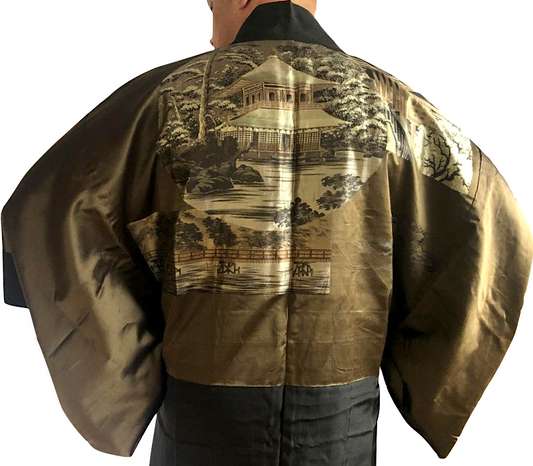
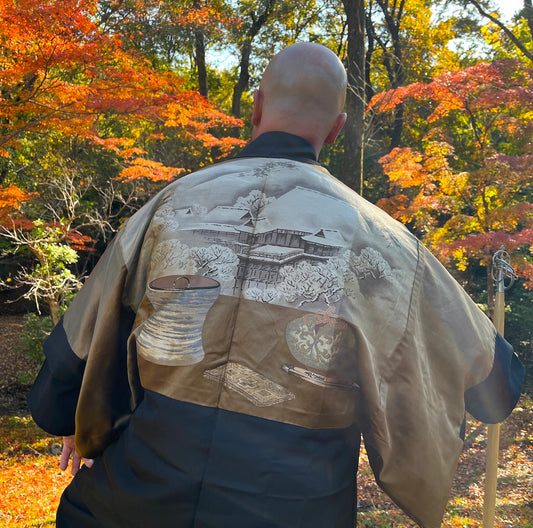
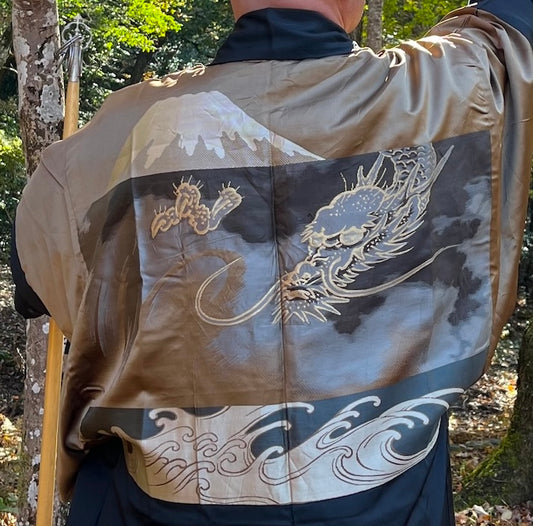
Every item presented through Bujindō is selected from the perspective of a practitioner. We do not choose products only because they look traditional or photograph well.
Clothing and equipment must support movement, posture, comfort, durability and the practical demands of training.
“You only know what you practice. You only understand what you truly use.”
Our selection gives priority to:
- Made in Japan martial arts equipment
- Traditional Japanese craftsmanship
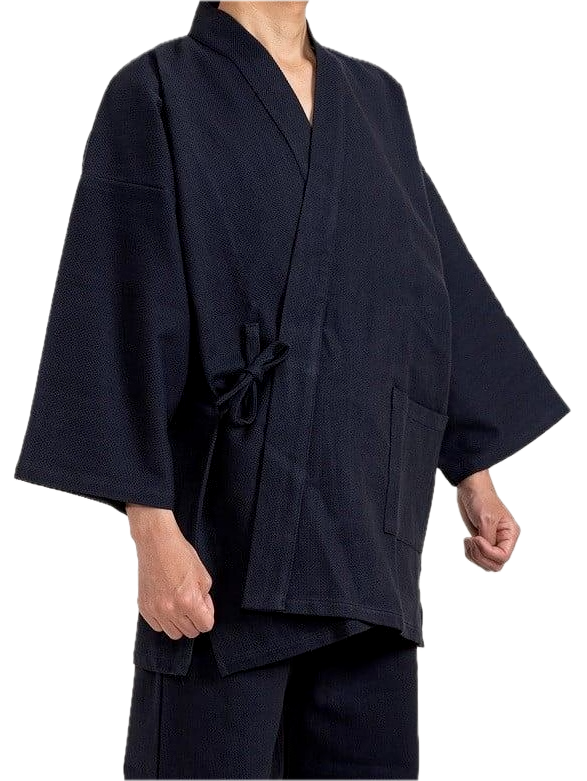
- Functional Ninjutsu training clothing
- Jika-tabi, tabi and footwear adapted to natural movement
- Shinobi shōzoku and Ninjutsugi designed for practice
- Traditional garments connected with Japanese culture
- Rare, vintage and antique objects carrying history
For martial artists and spiritual practitioners, equipment is not a superficial accessory. Appropriate clothing and tools can influence posture, concentration, freedom of movement and the overall quality of practice.

For Practitioners Who Share the Same Ikigai
I consider myself first and foremost a practitioner in service of Ninpō and Mikkyo, and a transmitter for those who share a similar ikigai 生き甲斐: a reason to live, practice and progress.
Bujindō is intended for people who value depth over appearance, practice over theory, discipline over comfort and truth over illusion.
It welcomes martial artists, Buddhist practitioners, students of Japanese culture and people seeking a path based on awareness, responsibility and respect for nature.

Frequently Asked Questions About Bujindō
What is Bujindō?
Bujindō is a Kyoto-based project combining authentic Ninjutsu and Ninpō practice, Japanese spiritual traditions, martial arts education and carefully selected Japanese training equipment.
What does Bujindō 武神堂 mean?
Bujindō can be translated symbolically as “The Temple of the Divine Warrior.” It represents the human being as a sacred place where courage, discipline, wisdom and compassion are cultivated.
Is Bujindō only an online Ninjutsu store?
No. The store is one part of a broader path based on martial practice, Ninjutsu teaching, Japanese culture, spiritual discipline and the transmission of practical knowledge.
Where is Bujindō based?
Bujindō is based in Kyoto, Japan, a historic center of Japanese Buddhism, traditional craftsmanship and spiritual culture.
What is the relationship between Ninpō and Mikkyo?
In the Bujindō approach, Ninpō and Mikkyo share principles of vigilance, transformation, inner discipline, protection, compassion and mastery of the mind. They remain distinct traditions, but they can illuminate one another through sincere practice.
Are Bujindō products suitable for real Ninjutsu training?
Products are selected from the perspective of practical use, with priority given to movement, durability, comfort, traditional Japanese manufacturing and relevance to genuine martial arts training.