 Japanese clothing origin and buying guide
“Made in Japan” can be valuable information when choosing a samue, jinbei, yukata or hanten—but it should be understood precisely. It identifies the origin of the finished product under the rules that apply to the real manufacturing process. It does not automatically mean that every material is Japanese, every stage is performed by hand or every garment has the same level of quality.
This guide explains how to separate manufacturing origin from fabric origin, brand nationality, regional textile names and documented handwork. It also gives international buyers a practical method for evaluating Japanese clothing before ordering.

What Does “Made in Japan” Establish?
In Japanese, 日本製(にほんせい, Nihon-sei) means “made in Japan” or “Japanese-made.” On clothing, it is an origin statement about the product. It should be supported by the actual production process, not merely by Japanese styling, a Japanese company address or shipping from Japan.
Japan’s Consumer Affairs Agency explains that, for origin-representation purposes, the country of origin is generally the country where an act producing a substantial change in the product’s content was performed. Japan Customs similarly describes origin, in general terms, as the country or region where goods were actually produced or manufactured.
For a garment assembled through operations in more than one country, the correct conclusion depends on the real manufacturing stages and the applicable rules. A product page should therefore state only an origin that the seller or maker can substantiate.

What “Made in Japan” Does Not Automatically Mean
The phrase should not be expanded into claims that it does not make. Unless the product description provides separate evidence, “Made in Japan” does not automatically establish that:
- the fabric was woven in Japan;
- the cotton, linen, silk or synthetic fiber originated in Japan;
- the garment was completely handmade;
- a traditional handloom was used;
- the maker belongs to a centuries-old workshop;
- every stage took place in Kyoto, Kurume or another named region;
- the design is historically unchanged;
- natural fibers were used;
- the garment is automatically stronger or more comfortable;
- the fit will suit every international customer.
This distinction does not reduce the value of Japanese manufacture. It makes the claim more credible. Buyers can appreciate origin while still comparing the features that determine whether a garment is right for them.

Made in Japan, Japanese Fabric and Handmade: The Claims Compared
| Claim | What it may establish | What it does not establish by itself | What to verify |
|---|---|---|---|
| Made in Japan | Origin of the finished garment under the applicable origin rules | Japanese fabric or fully handmade production | Manufacturing country and maker documentation |
| Japanese brand | Brand ownership or business origin | Japanese manufacture | The “Made in” statement on the exact product |
| Designed in Japan | Design or product-development origin | Cutting, sewing or finishing in Japan | Separate manufacturing-country information |
| Japanese fabric | Textile production in Japan when documented | Garment assembly in Japan | Where the cloth was woven and where the garment was sewn |
| Handmade in Japan | Documented manual work in Japan | That every stage was performed entirely by hand | Which operations were manual and by whom |
| Japanese craftsmanship | A broad description of skill, method or finishing | A specific technique, workshop or certification | Maker, process, region and evidence supporting the phrase |
| Kurume textile | A documented connection to textile production in the Kurume area | That the entire garment was handwoven and sewn in Kurume | Whether the claim concerns cloth, sewing, brand or all three |
| Ships from Japan | Dispatch location | Japanese manufacturing origin | The actual country of manufacture |

Where Was the Garment Actually Made?
Clothing production can include textile weaving or knitting, dyeing, cutting, sewing, padding, finishing, inspection, labeling and packaging. These stages do not necessarily occur in the same place.
For buyers, the most useful approach is not to assume that one label describes every stage. Instead, look for precise statements such as:
- Garment made in Japan: a product-level origin claim about the finished item;
- Woven in Japan: a textile-origin statement that does not automatically identify the sewing country;
- Cut and sewn in Japan: information about garment construction;
- Finished or inspected in Japan: information about limited final stages, not necessarily full manufacture;
- Designed in Kyoto: a design-location claim, not a manufacturing-origin claim;
- Shipped from Kyoto: a logistics statement only.
A Japanese address, flag, temple photograph or Japanese brand name must never replace clear country-of-manufacture information. Japanese authorities treat origin representations that make the true origin difficult for consumers to identify as potentially misleading.

Where Was the Fabric Woven?
A Japanese-made garment can use domestic or imported cloth. Conversely, Japanese-woven fabric can be exported and sewn into a garment elsewhere. Both products may be legitimate, but they make different claims.
When textile provenance matters to you, check three separate fields:
- Fiber composition: for example cotton, linen, silk, polyester or a verified blend;
- Fabric origin: where the cloth was woven, knitted, dyed or finished, when documented;
- Garment origin: where the finished clothing obtained its applicable country of origin.
Terms such as “Japanese cotton” can be ambiguous. They may refer to cotton fabric woven in Japan, a Japanese textile specification or simply a product sold by a Japanese company. A transparent description should explain exactly what the phrase means.

Made in Japan vs Handmade in Japan
Made in Japan and handmade in Japan are not synonyms. A Japanese garment may be produced in a modern factory using skilled machine cutting and sewing. It can still be genuinely made in Japan without being handmade.
Likewise, “handmade” can describe one or several manual stages rather than an entirely manual process. Garment production almost always combines human skill with tools or machines. A strong handmade claim therefore explains the work instead of relying on an evocative word.
Questions that make a handmade claim meaningful
- Which stage is performed by hand?
- Is the garment cut individually?
- Is the sewing performed to order?
- Is the dyeing, pattern application or finishing manual?
- Is the workshop or maker identified?
- Does “hand-finished” refer to a specific operation?
Japanese Brand vs Japanese-Made Product
A Japanese brand can manufacture in Japan or overseas. Overseas production does not automatically make a product poor or deceptive; the essential requirement is clear information. Many reputable Japanese companies use different factories, materials and countries according to product category and price.
Before ordering, distinguish:
- the country where the brand is based;
- the country where the product was designed;
- the origin of the fabric;
- the country of manufacture of the finished garment;
- the location from which the order is shipped.
A product can therefore be designed by a Japanese brand, manufactured abroad and shipped from Japan. Another can be sewn in Japan from imported cloth. A third can use Japanese fabric but be assembled overseas. Accurate descriptions help buyers choose according to their priorities without treating one production model as automatically illegitimate.

Kurume and Other Japanese Textile Regions
Regional textile names can add valuable provenance, but the exact connection should be stated. For example, a reference to Kurume may concern the weaving region, the manufacturer, the sewing workshop, a commercial tradition or the place from which the item was sourced.
Do not assume that a regional name automatically means handloom production or that every stage occurred in that region. Look for supporting details:
- the named maker or workshop;
- the textile or weave used;
- the location of weaving;
- the location of garment construction;
- any recognized certification or maker statement;
- the specific manual process, if one is claimed.
This careful approach protects the value of genuine regional work. It allows documented craftsmanship to stand out instead of reducing every Japanese product to the same generic marketing language.
Does “Made in Japan” Guarantee Better Quality?
No country-of-origin label provides a universal quality guarantee. Japanese manufacture may be an important purchasing criterion, especially for provenance, local production, specialist sizing or access to particular makers. The quality of an individual garment still depends on its actual materials and construction.
Compare the following:
- fiber composition and fabric weight;
- weave, texture and seasonal suitability;
- stitching and stress-point reinforcement;
- lining or padding, when present;
- finished-garment measurements;
- freedom of movement and intended use;
- care instructions and expected shrinkage;
- maker transparency and quality control;
- current stock, made-to-order status and return conditions.
In other words, buy the garment—not only the label. Origin should strengthen a well-documented product description, not replace it.
How to Verify Japanese Clothing Before Buying Online
Use this checklist on the exact product page rather than relying only on a collection title or general store description.
- Find the country of manufacture. Do not confuse it with the brand address or dispatch location.
- Read the complete material percentages. “Japanese style” is not a fiber composition.
- Check fabric origin separately. Look for “woven in Japan” or another precise statement.
- Identify the maker or workshop when disclosed. Do not assume every supplier uses the same process.
- Ask what “handmade” describes. Cutting, sewing, dyeing and finishing are different operations.
- Use finished measurements. Japanese S/M/L labels are not universal international conversions.
- Read product-specific care instructions. Cotton, linen, silk, synthetics and padded garments require different care.
- Confirm the intended use. Meditation, homewear, festivals and winter layering require different garments.
- Check availability and production time. In-stock, vintage and made-to-order items follow different timelines.
- Review return conditions before purchase. This is especially important for altered or made-to-order clothing.
For a broader selection process covering sizing, fabric, season and cultural use, visit the BujindoShop Buyer Guide.

Which Japanese Garment Should You Choose?
Once you understand the product’s origin, choose according to climate, activity and fit. The four garment families below serve different needs.

Samue: meditation, work and relaxed daily wear
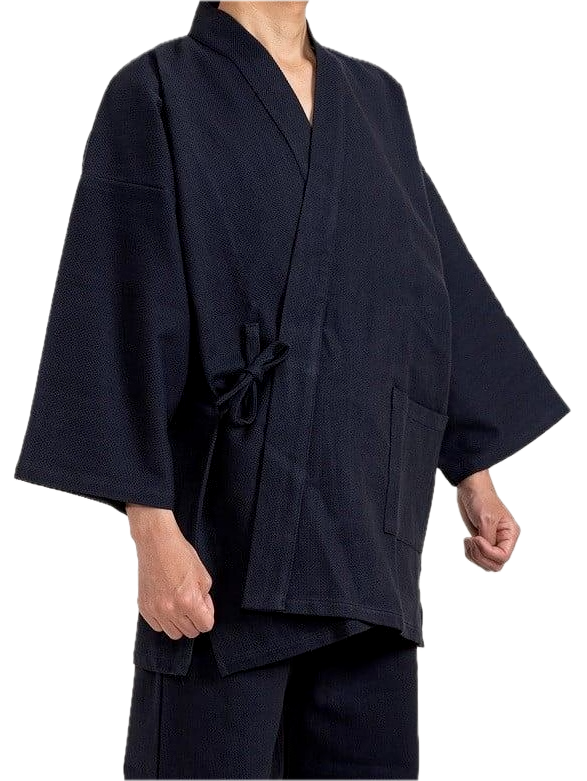
Choose a samue when you want a practical two-piece outfit with a jacket and trousers. Compare the season, fabric, cut and measurements rather than assuming that every samue uses the same textile or monastic specification.

Jinbei: lightweight comfort for summer
Choose a jinbei for warm weather, homewear, travel or a relaxed festival outfit. Check the cotton or blend, sleeve construction, shorts measurements and washing instructions on the exact model.

Yukata: summer festivals, ryokan and seasonal style
Choose a yukata when you want a traditional summer robe for matsuri, ryokan, onsen or relaxed seasonal wear. Verify the garment length, fabric, included accessories and whether an obi must be purchased separately.

Hanten: practical Japanese outerwear Summer & Winter
Choose a hanten according to its actual construction. A padded winter hanten is selected for warmth, while an unpadded or lightweight jacket serves a different seasonal purpose. Check the lining, padding, fabric and finished dimensions.

Formal Japanese Haori for Men: distinguished outerwear for ceremonial style
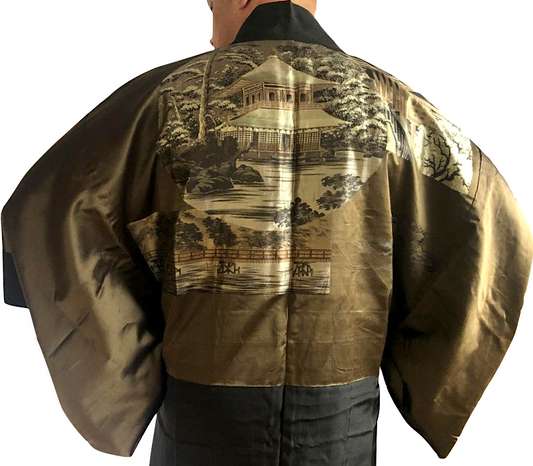
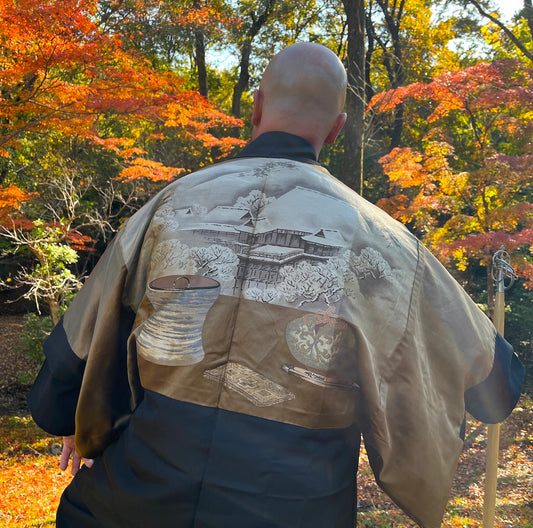
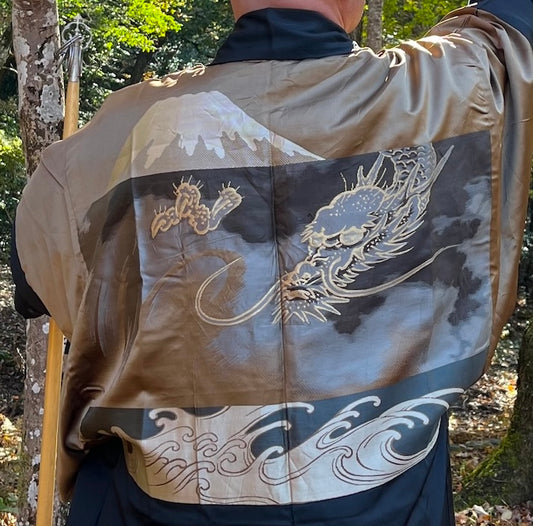
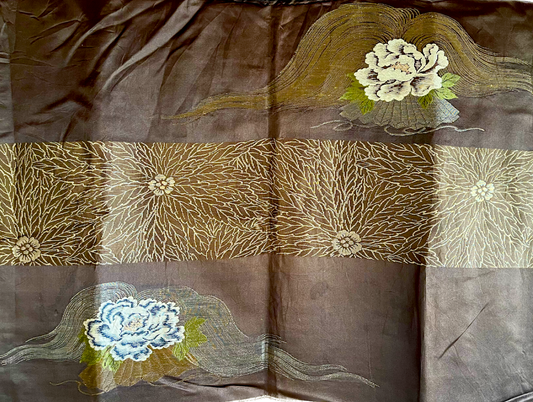
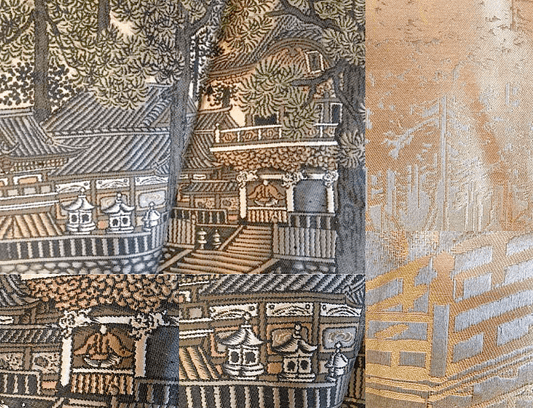
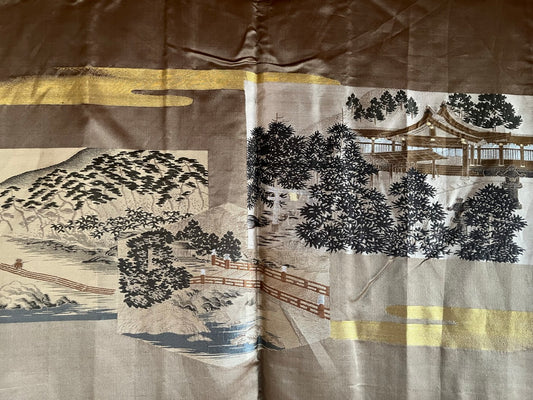
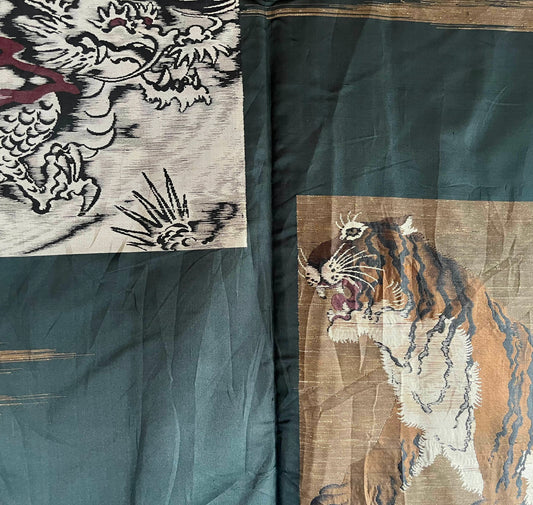
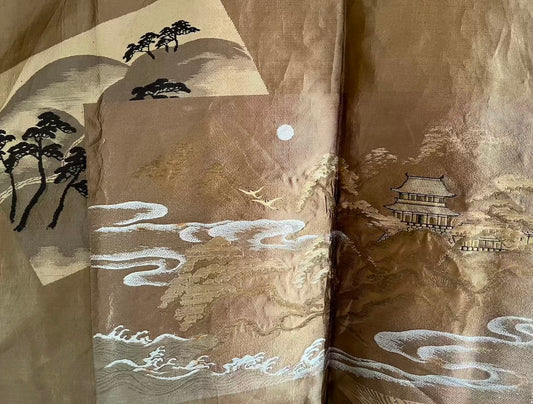
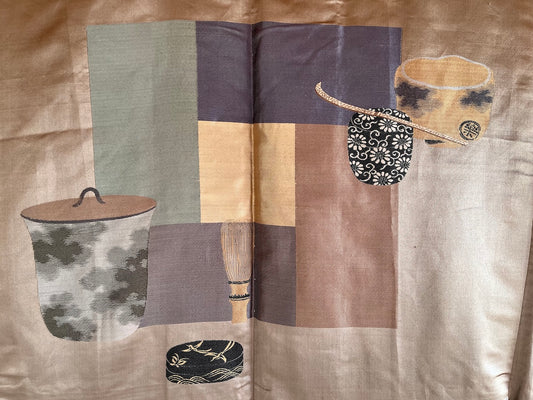
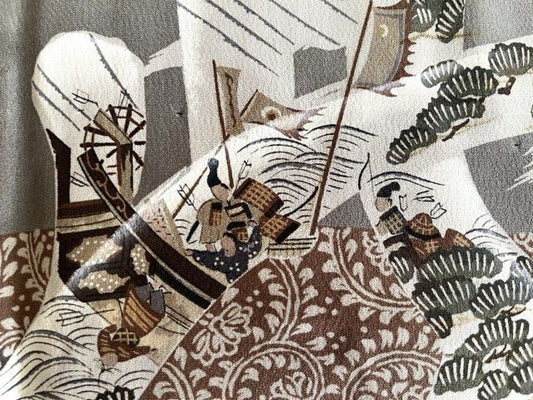
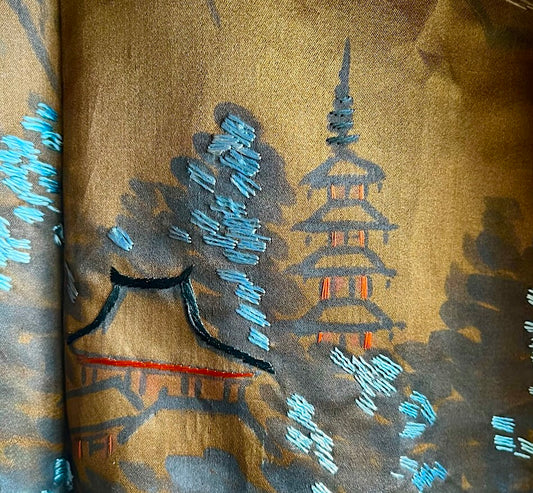
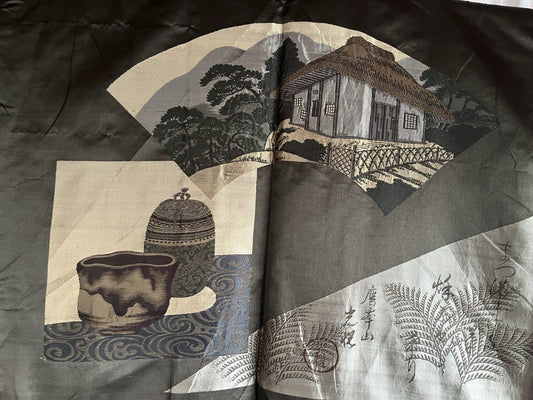
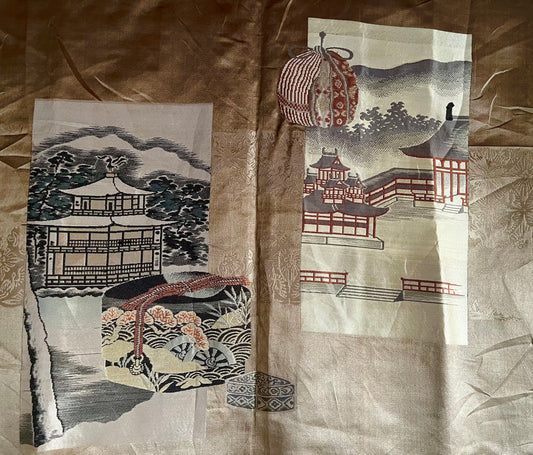
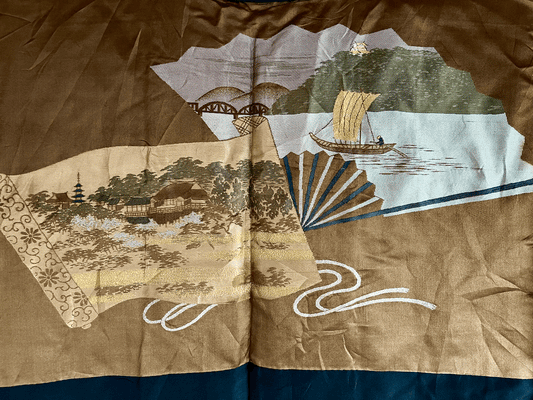
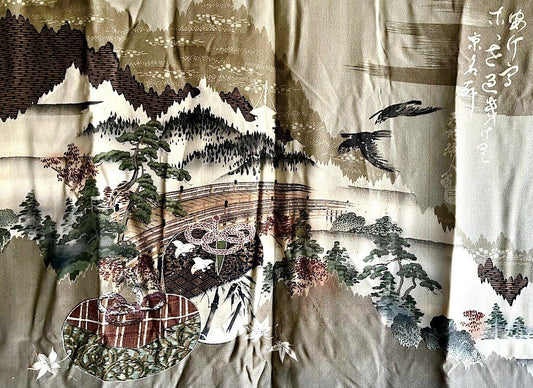
Choose a formal men’s haori when you want a refined outer layer for ceremonies, cultural occasions, formal styling or collecting. These authentic Japanese garments may feature traditional crests, silk textiles and individual vintage characteristics. Check the exact measurements, condition, material, crest details and care requirements of each one-of-a-kind piece before ordering.

Formal Japanese Kimono for Men: traditional elegance and collectible character
Choose a formal men’s kimono for ceremonies, traditional coordination, cultural events or a distinctive Japanese collection. Because antique and vintage kimono can differ significantly in length, width, fabric and condition, compare the complete finished measurements and product photographs rather than relying on a modern international size label.

Ninjutsugi: practical clothing for Ninjutsu training
Choose a Ninjutsugi when you need a functional training uniform designed for repeated movement, kneeling, rolling and martial practice. Compare the fabric weight, jacket construction, trouser cut, reinforcement, included belt and actual measurements. Always follow your instructor’s or dojo’s clothing requirements before purchasing.

Shinobi Shōzoku: complete traditional-style Ninja outfits
Choose a Shinobi Shōzoku when you want a coordinated traditional-style Ninja outfit for training, demonstrations, cultural presentation or collection. Check exactly which pieces are included, how the garment is constructed, whether production is made to order and which measurements are required. A modern Shinobi Shōzoku should not be treated as proof of one universal historical Ninja uniform.

TabiRela: flexible split-toe shoes for travel and daily wear
Choose TabiRela when you want lightweight Japanese split-toe footwear for walking, travel or relaxed everyday use. Compare the exact Japanese size, upper material, sole, closure and intended use of each model. TabiRela shoes are modern footwear and should be distinguished from textile tabi socks and traditional work-oriented jika-tabi.

Marugo Hitoe: minimalist barefoot-style split-toe footwear
Choose Marugo Hitoe when you want flexible, close-to-the-ground split-toe footwear for suitable everyday activities and controlled movement. Review the model-specific fit, Japanese sizing, sole construction, upper material and intended environment before ordering. Minimal cushioning and ground feel are design characteristics, not guarantees of improved performance or injury prevention.
Customers specifically researching samue origin can also read Where to Buy an Authentic Japanese Samue?. Use that page together with this origin guide: authenticity, manufacturing country, material and craftsmanship are related, but they are not interchangeable concepts.
How to Read Origin Information on BujindoShop
BujindoShop is based in Kyoto and offers Japanese clothing to international customers. However, the origin and construction of each item should be read from its individual product information. A store location in Japan or shipment from Kyoto does not, on its own, determine where a product was manufactured.
Before buying, use the following product-level information whenever it is available:
- manufacturing country;
- brand or maker;
- fabric composition;
- fabric or weaving origin when verified;
- documented handmade stage;
- finished measurements;
- care instructions;
- stock or made-to-order status;
- shipping and return conditions.
If a detail that matters to your purchase is not shown, request confirmation for the exact item before ordering. This is more reliable than applying a general claim to an entire collection.

Frequently Asked Questions
Does “Made in Japan” mean handmade?
No. “Made in Japan” concerns the origin of the finished product. Handmade describes manual work. A Japanese-made garment may be produced with modern machines, while a valid handmade claim should explain which stages were performed manually.
Can a Japanese brand manufacture clothing outside Japan?
Yes. Brand nationality and manufacturing origin are separate. Check the country-of-manufacture statement for the exact product rather than relying on the company name or Japanese branding.
Can imported fabric be used in Made in Japan clothing?
Potentially, yes. Finished-garment origin and fabric origin are different facts. The correct product claim depends on the actual manufacturing process and applicable origin rules.
Does Japanese fabric mean the garment was made in Japan?
No. Fabric can be woven in Japan and sewn elsewhere. Conversely, a garment made in Japan may use imported cloth. Look for separate statements covering the textile and the finished product.
Does “shipped from Japan” mean “Made in Japan”?
No. Shipping origin tells you where the parcel was dispatched. It does not establish the garment’s manufacturing country.
Is every Kurume garment handwoven?
No universal conclusion should be drawn from the regional name alone. Confirm whether Kurume refers to the textile, maker, sewing location or another documented connection, and check whether a handloom process is specifically stated.
Is Made in Japan clothing always better quality?
No origin label guarantees universal quality. Compare the fabric, sewing, fit, measurements, durability, care and transparency of the individual garment.
Can a synthetic garment still be authentic Japanese clothing?
Yes. Japanese garments can legitimately use natural fibers, synthetic fibers or blends according to season, function and maker. Material choice and manufacturing origin should be described separately.
What is the difference between Japanese-made and Japanese-style clothing?
Japanese-made is an origin claim. Japanese-style describes appearance or inspiration and can apply to products manufactured anywhere. “Style” should not be read as a country-of-origin statement.
How can I verify the origin of clothing sold online?
Check the exact product page, garment label, maker information and country-of-manufacture statement. Separate these from the brand address, fabric description and shipping origin. Ask the seller when an important detail is unclear.
Which Japanese garment is best for a first purchase?
Choose by use: samue for a practical two-piece outfit, jinbei for summer comfort, yukata for a traditional summer robe, or hanten for outerwear and—when padded—winter warmth. Then compare measurements and product-specific origin information.
Choose Japanese clothing through precise information
Origin matters, but the best purchase combines documented manufacturing information with the right fabric, size, season and intended use. Explore each collection, read its dedicated guide and verify the exact product before ordering.
This page provides general consumer guidance, not legal advice. Origin must be assessed from the actual product, manufacturing process and rules applicable to the sale and destination market.