The Complete Buying Guide to Men's Antique Formal Haori
Men’s Antique Formal Haori Buying Guide

A complete BujindoShop.com guide to choosing an authentic men’s antique formal haori in black silk habutae, with montsuki family crests, hidden lining artwork, Kyoto temple scenes, samurai motifs, and traditional Japanese craftsmanship.
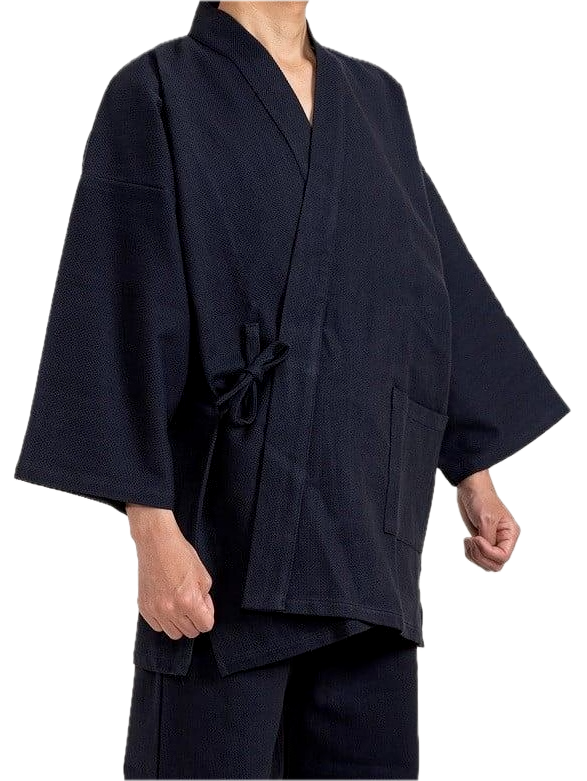
A men’s antique formal haori, also known as a black silk montsuki haori, is one of the most elegant garments in traditional Japanese menswear. Traditionally worn over kimono for formal, ceremonial, and cultural occasions, it combines a sober black silk exterior with deeply symbolic details: family crests, refined tailoring, and often a spectacular hidden lining.
At BujindoShop.com, our Men’s Antique Formal Haori Collection brings together 26 hand-selected pieces, each chosen for its silk quality, crest design, lining artwork, symbolism, and collectible value. This buying guide will help you understand what makes these haori special and how to choose the right piece according to your budget, purpose, measurements, and connection to Japanese culture.

What Is a Men’s Formal Antique Haori?
A formal haori is a traditional Japanese over-jacket worn by men on important occasions such as weddings, tea ceremonies, New Year visits, religious events, formal photography, martial arts demonstrations, and cultural ceremonies. The most formal type is the black montsuki haori, decorated with one, three, or five family crests called kamon.
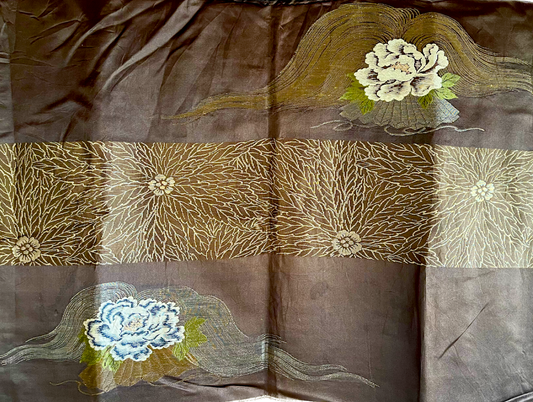
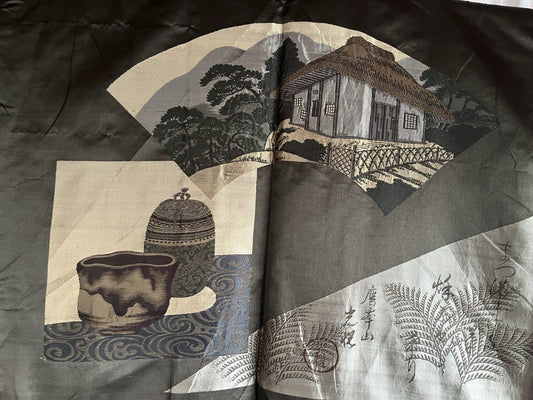
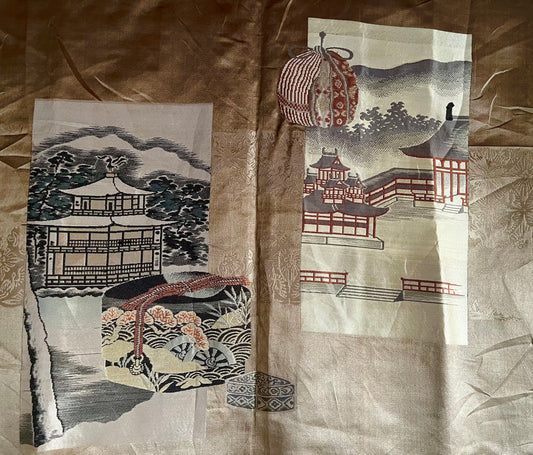
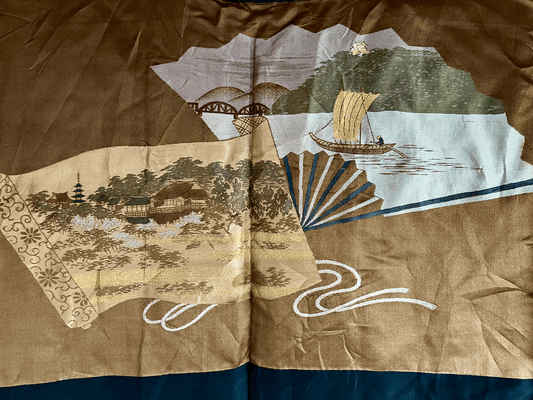
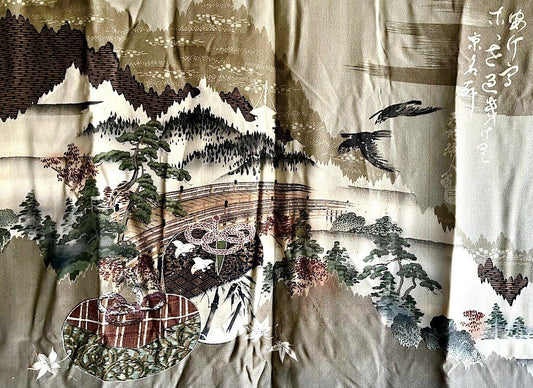
Most pieces in this collection are made from black silk habutae, a smooth and elegant silk traditionally used for formal kimono and haori. The exterior is intentionally understated, expressing dignity, restraint, and ceremonial presence. The true artistic expression is often found inside the jacket, in the lining known as the ura or haura.
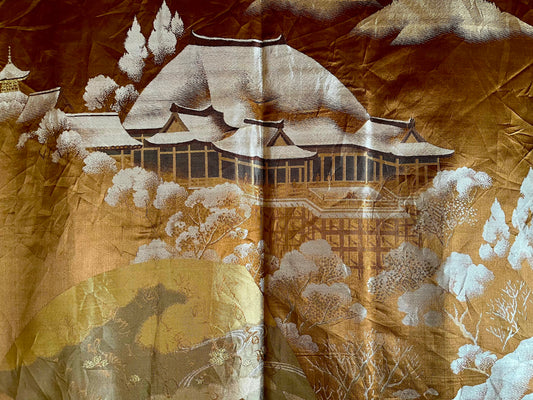
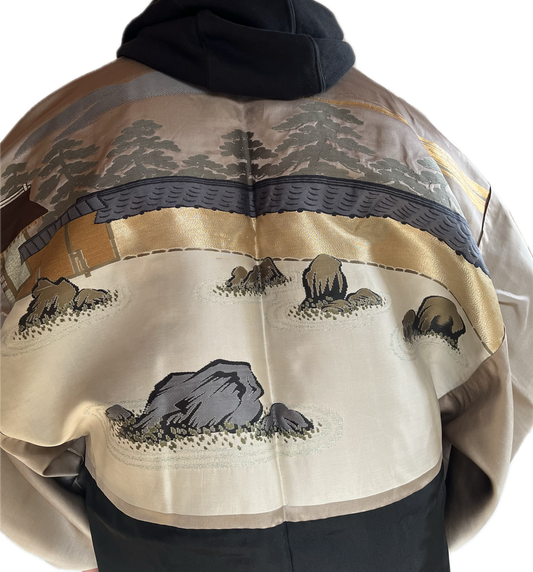
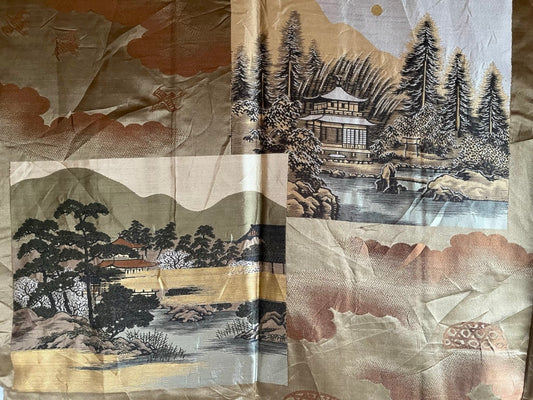
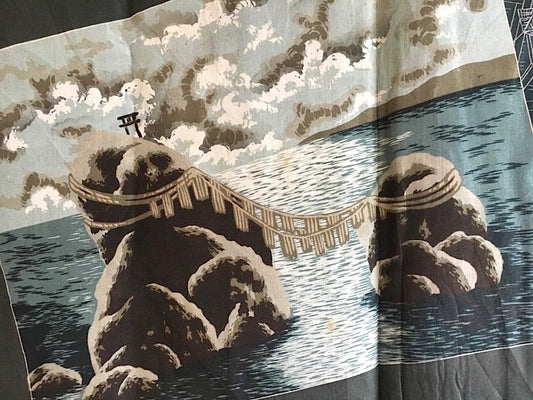
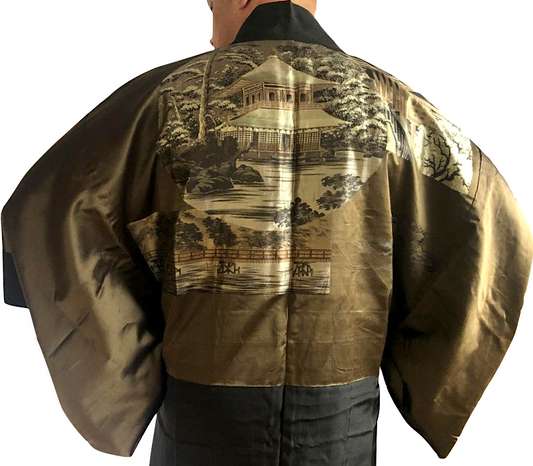
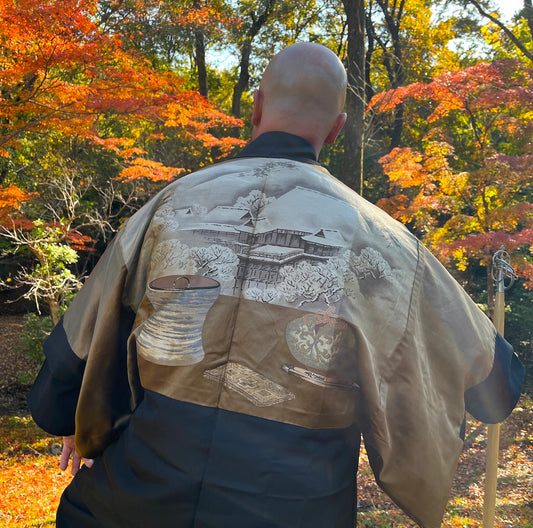
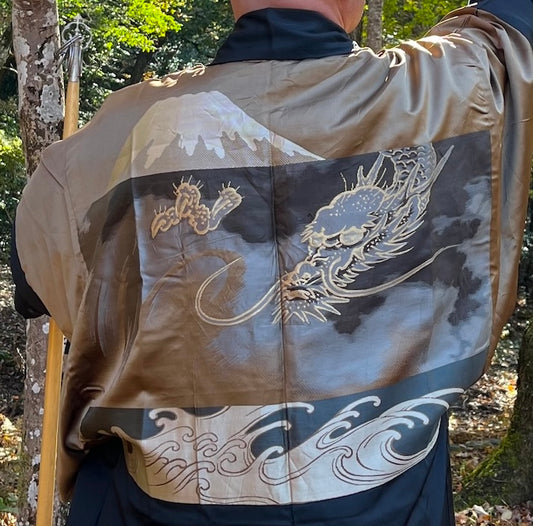
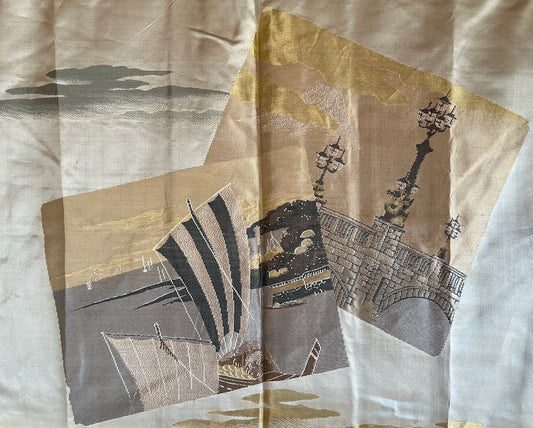
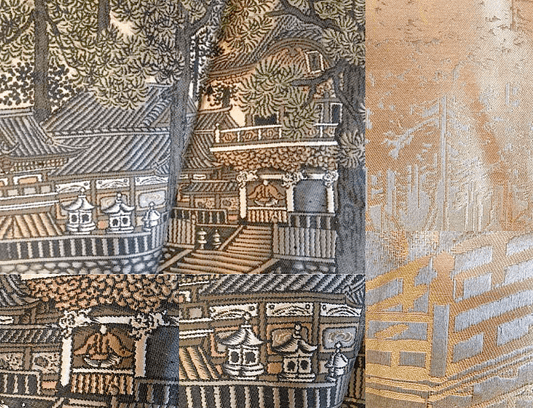
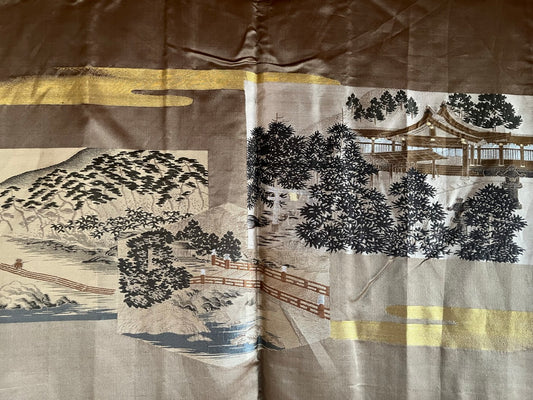
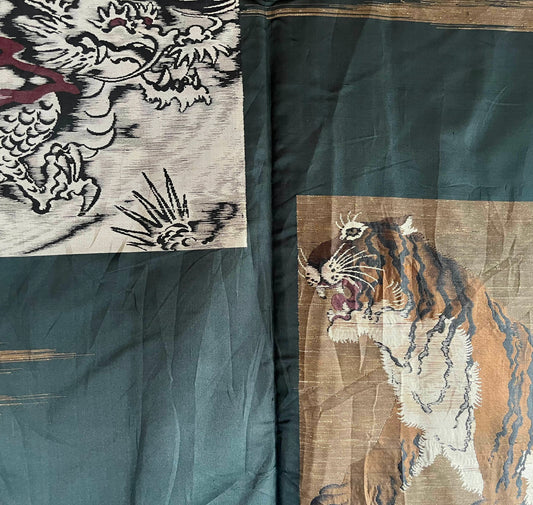
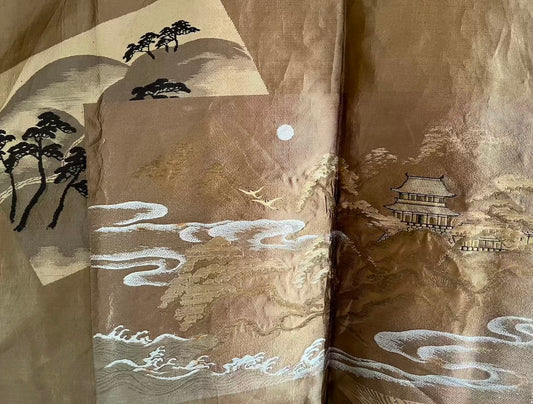
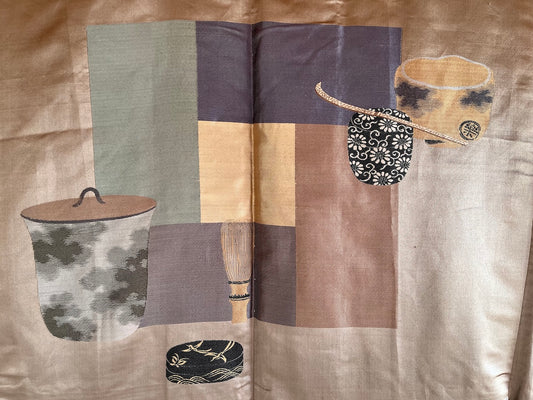
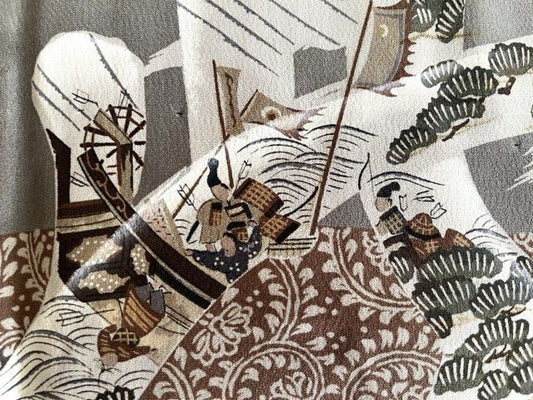
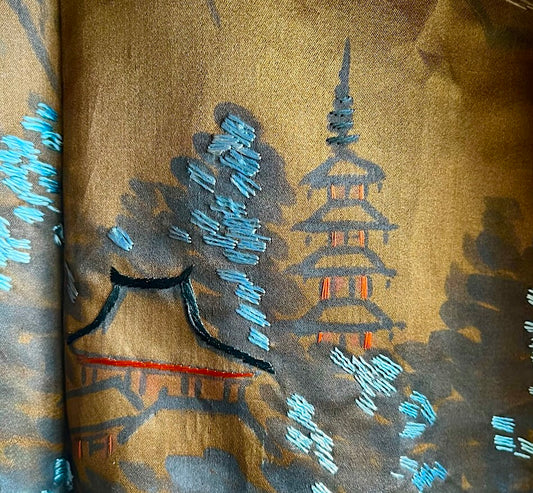
The hidden lining may feature hand-painted or woven designs such as Kyoto temples, Zen gardens, Mount Fuji, dragons, cranes, samurai helmets, tea ceremony scenes, shrines, seasonal landscapes, or warrior motifs. This contrast between a discreet black exterior and a richly decorated interior is one of the most fascinating aspects of antique Japanese haori.

Why Choose an Antique Japanese Haori?
An antique Japanese haori is not simply a jacket. It is a wearable piece of Japanese textile history. Unlike modern reproductions, each antique haori carries its own character through the silk texture, crest pattern, hand-finished details, and symbolic artwork hidden inside the lining.
- Authenticity: genuine vintage or antique Japanese craftsmanship.
- One-of-a-kind character: each lining, crest, and design is unique.
- Formal elegance: ideal for ceremonies, display, photography, or collection.
- Cultural depth: many pieces feature temples, shrines, samurai, Zen, tea ceremony, or seasonal symbolism.
- Collector value: once a specific antique haori is sold, the same piece cannot be restocked.
Men’s Antique Formal Haori Collection at a Glance
| Detail | Information |
|---|---|
| Collection | Men’s Antique Formal Haori |
| Total pieces listed in this guide | 26 hand-selected antique haori |
| Price range | From $140.00 to $368.40 USD |
| Main material | Black silk habutae / pure silk, depending on each piece |
| Crest style | Montsuki family crests, usually 1 to 5 kamon |
| Lining style | Hand-painted, woven, embroidered, scenic, or symbolic inner designs |
| Availability | Limited one-of-a-kind antique pieces. Stock may change quickly. |
How to Choose a Men’s Antique Haori by Budget
Because every antique haori is unique, pricing depends on several factors: silk quality, condition, rarity of the crest, complexity of the lining artwork, symbolic theme, visual impact, and collectible value. To make selection easier, this collection is organized into three price tiers.
Premium Tier — $300 and Above
The premium tier includes the most elaborate and collectible haori in the collection. These pieces often feature large-format lining artwork, Kyoto temple scenes, gold-toned details, dragon motifs, samurai helmets, sacred landscapes, or refined Zen imagery. They are ideal for collectors, ceremonial wear, cultural display, or anyone seeking a rare statement piece.
- Men’s Japanese Haori Black Silk Umebachi Montsuki — Zen Garden of Ryoanji Temple, Kyoto — $368.40
- Men’s Antique Haori Black Silk Kikyo Montsuki Kyomizudera — $368.40
- Antique Men’s Haori Jacket — Zen Garden of Ryoanji Temple, Kyoto Deluxe Edition — $368.00
- Men’s Antique Japanese Haori Black Silk Tsuru Montsuki with Golden Samurai Helmet Kabuto — $359.00
- Men’s Haori Antique Black Silk Dakimyoga Montsuki, Temple Ginkakuji and Kinkakuji Kyoto — $331.43
- Men’s Japanese Haori Black Silk Katabami Montsuki Meoto Iwa Ise — $329.00
- Antique Men’s Haori Black Silk Montsuki, Ginkakuji and Arashiyama Pattern — $307.00
Mid Tier — $200 to $299
The mid tier is the heart of the collection. These antique silk haori offer a strong balance between artistic quality, cultural symbolism, and accessible pricing. They are excellent choices for first-time buyers, martial arts practitioners, collectors, or anyone looking for a formal Japanese haori with distinctive character.
- Men’s Haori Black Silk Mokkou Montsuki Kyomizu Dera Kyoto — $299.00
- Men’s Haori Black Silk Katabami Montsuki Fuji and Dragon Ryu — $299.00
- Japanese Men’s Formal Haori Black Silk Futatsu Hiki Montsuki, Japan Paris Art Style — $276.00
- Men’s Antique Samurai Haori Black Silk Montsuki Busho no Ikusa — $245.19
- Men’s Haori Antique Agarifuji Montsuki Tiger vs Dragon — $245.19
- Men’s Antique Traditional Japanese Haori Black Silk Montsuki OchaWashitsu — $245.19
- Men’s Antique Black Silk Haori Sumitate Yotsume Montsuki Toshogu Yomeimon Nikko — $239.00
- Men’s Antique Japanese Haori Jacket Black Silk Mokkou Montsuki Dragon vs Tiger — $239.00
- Men’s Antique Haori Black Silk Takanohane Montsuki Sado Tea Ceremony — $234.00
- Men’s Antique Japanese Haori Tachibana Montsuki, Kinkakuji and Jinja Kyoto — $232.87
- Men’s Japanese Haori Black Silk Katabami Montsuki, Kyomizudera Temple and Himeji Castle — $232.87
- Men’s Antique Japanese Haori Black Silk Kiri Montsuki Mount Fuji View — $232.87
- Men’s Haori Black Silk Mokkou Montsuki The Sky Castle Takeda-Jo — $232.00
Entry Tier — Under $200
The entry tier is perfect for discovering the world of authentic antique Japanese haori at a more accessible price. These pieces may have simpler lining artwork or more understated designs, but they still offer genuine silk, traditional construction, and the charm of one-of-a-kind Japanese craftsmanship.
- Men’s Vintage Haori Black Silk Samurai Crest Botan Kuyo — $197.00
- Men’s Antique Haori Black Silk Futatsu Hiki Montsuki Sansui Gaden — $183.58
- Men’s Haori Black Silk Kenkatabami Montsuki Shinto Shrine — $158.94
- Antique Japanese Haori Black Silk Montsuki with Mitsukashiwa Crests, Hunting Scene — $158.90
- Men’s Antique Haori Black Silk Tachibana Montsuki Aki no Nihon Fukei — $154.00
- Antique Japanese Men’s Haori Black Silk Katabami Montsuki with Horyuji Temple — $140.00

How to Choose by Lining Theme
The hidden lining is often the most important artistic feature of an antique haori. It gives the garment its personality, symbolism, and emotional power. When choosing your haori, look carefully at the interior artwork as well as the exterior crest.

Kyoto Temples and Famous Landmarks
Several haori feature famous Kyoto scenes such as Kyomizudera, Kinkakuji, Ginkakuji, Arashiyama, Ryoanji Temple, and Zen gardens. These designs are ideal for customers who love Kyoto, Japanese architecture, Zen aesthetics, and classical landscape painting.

Samurai, Warrior, and Bushido Motifs
Haori with kabuto samurai helmets, tiger and dragon designs, Busho no Ikusa battle scenes, Futatsu Hiki crests, or warrior symbolism are powerful choices for martial artists, budo practitioners, samurai culture enthusiasts, and collectors of Japanese warrior arts.

Nature and Seasonal Japanese Landscapes
Designs featuring Mount Fuji, Meoto Iwa, cranes, autumn landscapes, rivers, mountains, forests, and seasonal scenery reflect the Japanese tradition of expressing nature and the passing seasons through clothing and art.

Shrines, Temples, and Ceremony
Haori connected to Shinto shrines, Buddhist temples, tea ceremony, Horyuji Temple, Toshogu Shrine, Sado, or Zen gardens are especially appropriate for formal cultural settings, religious ceremonies, meditation spaces, or refined display.
Buying tip: For antique formal haori, the exterior shows dignity, while the lining reveals personality. Always check both the outside crest design and the inside artwork before choosing your piece.

Understanding Montsuki Family Crest Patterns
The word montsuki refers to garments decorated with family crests, known in Japanese as kamon. These crests were historically used to identify families, lineages, social status, and affiliations. On formal black haori, they also indicate ceremonial rank and elegance.
- Katabami: a wood sorrel leaf crest, one of the most widespread Japanese family crests.
- Mokkou: a stylized melon or cross-section pattern, often linked with samurai families.
- Kiri: the paulownia flower, historically associated with nobility and high status.
- Tachibana: a citrus blossom crest symbolizing refinement and continuity.
- Umebachi: a plum blossom design linked to elegance, renewal, and classical taste.
- Kikyo: a bellflower crest, simple, balanced, and highly recognizable.
- Futatsu Hiki: two horizontal bars, a bold crest associated with warrior families.
- Agarifuji: an upward-facing wisteria motif, graceful and traditional.
- Takanohane: a hawk feather motif evoking vigilance, precision, and disciplined strength.
- Mitsukashiwa: a three-oak-leaf crest often associated with protection, purity, and sacred symbolism.
If you already know a particular kamon or wish to choose a haori based on symbolic meaning, the BujindoShop.com team can help you identify the closest match within the collection.
Sizing Notes for Antique Japanese Haori
Antique haori do not follow modern Western sizing such as S, M, L, or XL. Each piece has its own measurements, including shoulder width, sleeve length, sleeve drop, total wingspan, and body length. Before ordering, always check the measurements listed on the individual product page.
For the best fit, compare the haori measurements with a jacket, kimono, or haori-style garment you already own. If you plan to wear the haori for formal photography, martial arts presentation, ceremony, or display, consider both physical fit and visual balance.
Care and Preservation of Antique Silk Haori
Because antique silk is delicate, proper care is essential. These garments should be treated as cultural and collectible pieces, not as ordinary washable jackets.
- Store flat or on a wide kimono hanger to reduce stress on the shoulders.
- Avoid long exposure to direct sunlight, which can fade antique silk.
- Do not machine wash.
- Use professional dry cleaning only, preferably by a cleaner experienced with antique silk.
- Air out the haori occasionally in a shaded, dry place.
- Avoid sealed plastic storage, which can trap humidity and damage the lining.
Quick Decision Guide
| If you are looking for... | Recommended choice |
|---|---|
| The most elaborate lining artwork | Premium Tier, especially Ryoanji Zen Garden, Kyoto temple, or Kabuto Samurai Helmet designs |
| A first antique haori at a balanced price | Mid Tier, especially Kyoto temple, Fuji, dragon, or tiger designs |
| An affordable authentic silk haori | Entry Tier under $200 |
| A martial arts or samurai-inspired piece | Busho no Ikusa, Kabuto Samurai Helmet, Tiger vs Dragon, Futatsu Hiki, or Takanohane designs |
| A piece for tea ceremony or spiritual settings | Sado Tea Ceremony, OchaWashitsu, Shinto Shrine, Horyuji Temple, Toshogu Shrine, or Zen Garden designs |
Frequently Asked Questions About Men’s Antique Haori
What is a men’s antique formal haori?
A men’s antique formal haori is a traditional Japanese over-jacket worn over kimono for formal occasions. It is often made from black silk and decorated with family crests called kamon. Many antique haori also feature hidden lining artwork.
What does montsuki haori mean?
Montsuki haori means a haori decorated with family crests. In traditional Japanese dress, black montsuki haori with multiple crests are considered highly formal and suitable for ceremonies and important occasions.
Can I wear an antique haori today?
Yes. An antique haori can be worn for formal events, cultural ceremonies, tea ceremony, martial arts demonstrations, photography, display, or refined modern styling. Because antique silk is delicate, it should be worn carefully and preserved properly.
Are antique haori one-of-a-kind?
Yes. Each antique haori is unique. Once a specific piece is sold, the same design, lining, crest, and condition cannot usually be restocked.
How should I choose the right antique haori?
Choose according to your purpose, budget, measurements, crest design, and lining artwork. Collectors often prioritize rare linings, while first-time buyers may prefer a balanced mid-tier piece with strong symbolism and good condition.
Is a black silk montsuki haori suitable for martial arts ceremonies?
Yes. A black silk montsuki haori can be suitable for martial arts demonstrations, formal presentations, photography, or ceremonial settings. For active physical training, however, antique silk should be handled with great care.
Final Advice Before Buying
A men’s antique formal haori is more than a garment. It is a meeting point between Japanese textile art, family symbolism, ceremony, and hidden beauty. Whether you are a collector, martial arts practitioner, tea ceremony enthusiast, photographer, or lover of Japanese culture, choosing the right haori means choosing a piece that resonates with your own sense of dignity and refinement.
Explore the Men’s Antique Formal Haori Collection at BujindoShop.com and discover a one-of-a-kind black silk montsuki haori selected for its history, symbolism, and craftsmanship.
Note: Prices, stock, and availability may change. Because each antique haori is unique, please check the individual product page for the latest measurements, photos, condition details, and availability before ordering.
-
Men's Japanese Haori Black Silk Umebachi Montsuki Zen Garden of Ryoanji Temple, Kyoto
Regular price $368.40Regular price$491.61Sale price $368.40PROMO -
Men’s Antique Haori – Black Silk Kikyo Montsuki Kyomizudera
Regular price $368.40Regular price$430.00Sale price $368.40PROMO -
Antique Men’s Haori Jacket - Zen Garden of Ryoanji Temple, Kyoto (Deluxe Edition)
Regular price $368.00Regular price$491.00Sale price $368.00PROMO -
Men’s Antique Japanese Haori – Black Silk Tsuru Montsuki with Golden Samurai Helmet (Kabuto)
Regular price $359.00Regular price$383.42Sale price $359.00PROMO -
Men’s Haori Antique - Black Silk Dakimyoga Montsuki Temple Ginkakuji & Kinkakuji Kyoto
Regular price $331.43Regular price$430.00Sale price $331.43PROMO -
Men’s Japanese Haori Black Silk Katabami Montsuki Meoto Iwa Ise
Regular price $329.00Regular price$369.00Sale price $329.00PROMO -
Antique Men’s Haori - Black Silk Montsuki Ginkakuji & Arashiyama Pattern Made in Japan
Regular price $307.00Regular price$359.00Sale price $307.00PROMO -
Men’s Haori Black Silk Mokkou Montsuki Kyomizu Dera Kyoto
Regular price $299.00Regular price$369.00Sale price $299.00PROMO -
Men’s Haori Black Silk Katabami Montsuki Fuji & Dragon RYU
Regular price $299.00Regular price$369.00Sale price $299.00PROMO -
Japanese Men's Formal Haori Black Silk Futatsu Hiki MonTsuki Japan Paris Art Style
Regular price $276.00Regular price$345.00Sale price $276.00PROMO -
Men’s Vintage Haori Black SilK Samurai Crest Botan Kuyo
Regular price $197.00Regular price$219.00Sale price $197.00PROMO -
Men’s Antique Haori – Black Silk Futatsu Hiki Montsuki – Sansui Gaden
Regular price $183.58Regular price$245.19Sale price $183.58PROMO -
Men’s Antique Black Silk Haori Sumitate Yotsume Montsuki Toshogu Yomeimon Nikko
Regular price $239.00Regular price$358.00Sale price $239.00PROMO -
Men's Haori – Black Silk Kenkatabami Montsuki – Shinto Shrine
Regular price $158.94Regular price$246.19Sale price $158.94Sold out -
Antique Japanese Haori Black Silk Montsuki with Mitsukashiwa Crests Hunting Scene
Regular price $158.90Regular price$245.19Sale price $158.90Sold out -
Men's Antique Japanese Haori Jacket Black Silk Mokkou Montsuki Dragon VS Tiger
Regular price $239.00Regular price$359.00Sale price $239.00PROMO -
Men's Haori Black Silk Mokkou Montsuki The SkyCastle "Takeda-Jo " Made in Japan
Regular price $232.00Regular price$249.00Sale price $232.00PROMO -
Men’s Antique Haori Black Silk Takanohane Montsuki SADO (Tea Ceremony)
Regular price $234.00Regular price$294.00Sale price $234.00PROMO -
Men's Antique Samurai Haori Black Silk Monstuki– Busho no Ikusa
Regular price $245.19Regular price$368.40Sale price $245.19PROMO -
Men's Haori antique - Agarifuji Montsuki Tiger VS Dragon
Regular price $245.19Regular price$356.08Sale price $245.19PROMO -
Antique Japanese Men’s Haori - Black Silk Katabami Montsuki with Horyuji Temple
Regular price $140.00Regular price$183.00Sale price $140.00PROMO -
Men’s Antique Traditional Japanese Haori Black Silk Montsuki OchaWashitsu
Regular price $245.19Regular price$405.36Sale price $245.19PROMO -
Men’s Antique Japanese Haori Tachibana Montsuki Kinkakuji & Jinja Kyoto
Regular price $232.87Regular price$356.08Sale price $232.87PROMO -
Men’s Japanese Haori – Black Silk Katabami Montsuki Kyomizudera Temple & Himeji Castle
Regular price $232.87Regular price$356.08Sale price $232.87PROMO -
Men’s Antique Haori – Black Silk Tachibana Montsuki – Aki no Nihon Fūkei
Regular price $154.00Regular price$206.00Sale price $154.00Sold out