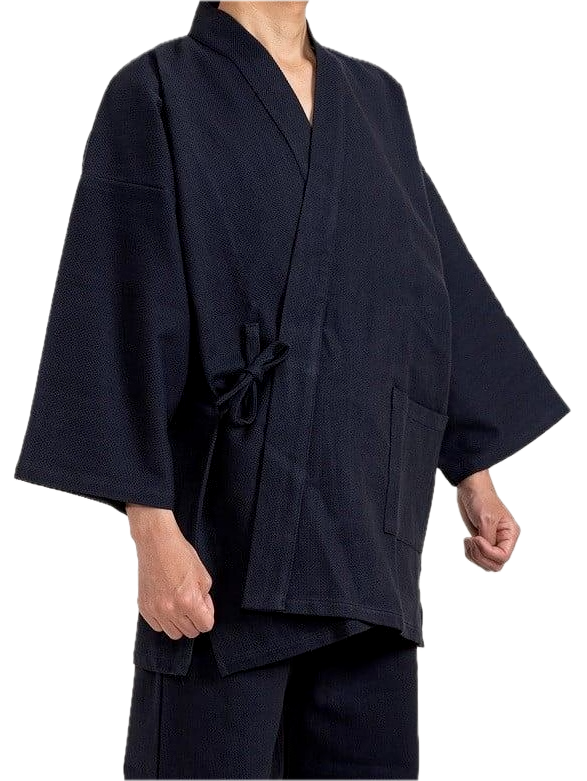


Shinobi Shozoku Guide – Traditional Ninja Clothing Explained
Discover the history, components, practical functions, and cultural significance of the traditional Japanese ninja outfit.
The Shinobi Shozoku (忍び装束), commonly known as the traditional ninja outfit or ninja uniform, represents one of the most recognizable visual symbols of Japanese Ninjutsu.
However, beyond its popular representation in movies and modern martial arts, the clothing associated with Japan's historical Shinobi no Mono (忍びの者) reflects a fascinating relationship between practical clothing, concealment, adaptability, and the realities of life in feudal Japan.
In this comprehensive guide, Bujindō explores the historical background of Shinobi Shozoku, its Japanese terminology, traditional clothing components, footwear, accessories, and modern applications within Ninjutsu and Togakure Ryū Ninpō.
Our approach combines Japanese historical documentation, traditional martial arts knowledge, and practical experience with Japanese Ninjutsu training equipment.

1. What Is Shinobi Shozoku (忍び装束)?
Shinobi Shozoku is a Japanese expression referring to clothing or attire associated with shinobi, the historical agents of intelligence gathering, reconnaissance, infiltration, and unconventional warfare in Japan.
The expression consists of two elements:
- 忍び (Shinobi): Concealment, stealth, endurance, and the act of remaining unnoticed.
- 装束 (Shozoku): Clothing, attire, or a particular form of dress.
Together, these terms describe clothing associated with the activities and practical requirements of the shinobi.
Yet, an important historical distinction must be made: historical shinobi did not necessarily wear a standardized black ninja uniform.
Their clothing depended on the environment, social circumstances, mission requirements, and the need to avoid attracting attention.
In many situations, ordinary Japanese clothing was considerably more practical than an easily recognizable specialized outfit.
The familiar black Shinobi Shozoku worn in modern martial arts therefore represents a recognizable traditional-style interpretation rather than a universal historical uniform.
2. Did Historical Ninja Really Wear Black?
The image of a ninja dressed entirely in black, with a hood covering the face and a sword at the waist, has become internationally associated with Ninjutsu.
However, historical evidence presents a more complex reality.
The Myth of the All-Black Ninja Uniform
In Japanese theatrical traditions, especially Kabuki, black-clad stage assistants known as Kurogo (黒衣) were conventionally treated as invisible by the audience.
This theatrical convention contributed to the visual association between black clothing and invisibility, although the complete evolution of modern ninja imagery involves several historical and cultural influences.
Historical shinobi were primarily concerned with remaining unnoticed rather than displaying a recognizable ninja identity.
Traditional Colors and Natural Camouflage
Japanese historical explanations, including material presented by the Ninja Museum of Iga, describe the use of dark navy-blue working clothes associated with rural life in the Iga and Koka regions.
Depending on the circumstances, practical clothing could include:
- Dark indigo or navy blue: Clothing associated with ordinary work garments and discreet nighttime movement.
- Dark brown: A subdued color that could be suitable for rural environments.
- Gray and muted earth tones: Practical colors that avoided drawing unnecessary attention.
- Ordinary civilian clothing: Often the most effective option when moving among other people.
A completely black silhouette can remain visible under moonlight or against a lighter background.
For this reason, choosing clothing that blends into the surrounding environment is generally more important than simply wearing black.
Reversible Clothing and Adaptability
Some Japanese illustrated descriptions of shinobi clothing present garments with different colors on their inner and outer surfaces.
One illustrated explanation describes an exterior in a very dark, slightly reddish black tone and an interior of a subdued persimmon-like color.
Such designs illustrate the idea that reversible clothing could provide different visual appearances according to the circumstances.
Other descriptions associate light blue with water-related activities, pale brown with earth-related concealment, and white with snowy environments.
These classifications should be understood as descriptions found in particular Japanese ninja references, rather than proof of a universally adopted historical clothing system.
The essential principle is adaptability: appropriate clothing depends on the circumstances in which it is used.

3. Traditional Shinobi Shozoku – Clothing Components Explained
A traditional-style Shinobi Shozoku can consist of several garments and accessories.
Their purpose is to allow the wearer to move comfortably, secure loose fabric, protect exposed areas, and carry necessary equipment.
The following terminology reflects Japanese illustrated ninja references and modern traditional-style Ninjutsu clothing.

3.1 Shinobi Zukin (忍び頭巾) – Ninja Hood
The Shinobi Zukin is a hood or head covering associated with traditional ninja imagery.
It may cover the head, hair, neck, and lower face, leaving the eyes exposed.
In traditional-style clothing, a hood can serve several practical purposes:
- Concealing distinctive facial features and hair.
- Reducing exposure to dust, wind, and vegetation.
- Providing additional coverage around the neck.
- Keeping loose hair from interfering with movement.

Some historical-style illustrations show cloth wrapped around the head rather than a modern sewn ninja mask.
The hood should remain comfortable and should never unnecessarily obstruct breathing, hearing, or peripheral vision.

3.2 Uwagi (上衣) – Traditional Ninja Jacket
The Uwagi is the upper garment of a traditional Japanese outfit.
In Shinobi Shozoku reproductions, the jacket generally features a crossed front, loose sleeves, and a fabric belt or sash.
A practical jacket should allow natural movement of the shoulders, elbows, and torso.
Freedom of movement is especially important during Ninjutsu exercises involving:
- Natural walking and body displacement.
- Changing direction and adjusting posture.
- Rolling and receiving falls.
- Training with traditional Japanese weapons.
- Outdoor practice in different environments.
Cotton is frequently used in modern traditional-style Shinobi Shozoku because it provides a familiar Japanese textile appearance and is suitable for regular martial arts practice.
Actual fabric composition and garment construction depend on the manufacturer and specific product.

3.3 Ninja Trousers Hakama – Traditional Japanese Leg Garments
Traditional-style ninja trousers are generally designed with generous fabric around the hips and thighs, while the lower legs are gathered or secured.
This construction allows freedom of movement while reducing excess fabric around the ankles.
The recognizable silhouette resembles elements of Japanese working garments, including certain forms of traditional Tattsuke Bakama (裁付袴).
Modern Shinobi Shozoku trousers are often adapted for Ninjutsu practice, demonstrations, and traditional Japanese clothing reproduction.
The most important practical considerations are sufficient room around the hips, comfortable knee movement, and securely fitted lower legs.

3.4 Obi (帯) – Japanese Clothing Belt
The Obi is the belt or sash used to secure Japanese garments.
In a Shinobi Shozoku, the obi helps keep the upper garment closed and the clothing properly adjusted.
It may also help support lightweight accessories when appropriate to the garment's construction.
The belt should remain secure without restricting breathing, hip movement, or natural posture.
3.5 Kusari Katabira (鎖帷子) – Japanese Chainmail
The Kusari Katabira is a garment incorporating Japanese chainmail.
In illustrated ninja equipment references, a mesh-like protective layer may be shown beneath the outer clothing.
Traditional Japanese kusari consists of interconnected metal rings, sometimes attached to textile garments.
It is important to distinguish authentic metal chainmail from decorative mesh fabrics used in modern ninja costumes.
Modern mesh clothing may reproduce the visual appearance of chainmail, but it does not provide equivalent protection.

3.6 Tekko (手甲) – Ninja Wrist and Forearm Guards
Tekko, also written Tekkō (手甲), are traditional Japanese hand, wrist, and forearm coverings.
They can help protect exposed skin, secure loose sleeves, and provide additional coverage during outdoor activities.
Depending on their construction, Tekko may be made from cotton or other textiles.
Some models use ties, straps, or traditional Japanese fasteners known as Kohaze (小鉤).
For Ninjutsu practice, Tekko should fit securely without restricting wrist mobility or natural hand movements.
Discover our selection of Traditional Japanese Tekko and Ninja Wrist Guards .

3.7 Tabi (足袋) – Traditional Japanese Split-Toe Footwear
Tabi are traditional Japanese split-toe socks or footwear.
Their distinctive construction separates the big toe from the remaining toes.
Traditional textile tabi are different from modern rubber-soled Jika Tabi boots.
Illustrated Japanese ninja references include Wata Tabi (綿足袋), or cotton tabi, as part of the clothing system.
For contemporary Ninjutsu practice, the appropriate footwear depends on the training surface and environment.
- Indoor cotton tabi: Suitable for certain traditional indoor practice environments.
- Traditional tabi: Can be combined with appropriate Japanese sandals.
- Modern training tabi: Designed for specific contemporary martial arts applications.
Explore the Ninjutsu Tabi Collection to discover Japanese split-toe footwear for traditional clothing and martial arts practice.

3.8 Waraji (草鞋) – Traditional Japanese Straw Sandals
Waraji are traditional Japanese sandals made from braided straw or similar fibers.
They were historically used by travelers, workers, and various members of Japanese society.
Waraji are also represented in illustrated traditional ninja clothing references.
Their flexible construction and tying system allow the sandals to be secured around the feet.
In modern Ninjutsu demonstrations, Waraji help illustrate the footwear associated with historical Japanese travel and everyday life.
Their suitability for active practice depends on the terrain, construction, fit, and the wearer's experience.
Browse our Traditional Japanese Waraji Sandals .
4. Additional Ninja Equipment Illustrated in Japanese References
Traditional Japanese ninja illustrations frequently show clothing together with tools and accessories.
These objects illustrate how garments could be combined with equipment for carrying, movement, and practical activities.

4.1 Kaginawa (鉤縄) – Hooked Rope
The Kaginawa is a rope fitted with a metal hook or multiple hooks.
It appears in Japanese references to traditional ninja equipment.
The illustrated examples show how a rope and hooked attachment could be carried alongside other personal equipment.
Historical illustrations do not establish the load-bearing capacity of a particular modern reproduction.
For safety, decorative or historical-style Kaginawa should never be assumed suitable for climbing or supporting human weight without appropriate engineering certification.

4.2 Ninja To (忍者刀) – Ninja Sword
The term Ninja Tō, also written Ninjatō, is commonly used today for a sword associated with ninja imagery.
Illustrated Japanese ninja references sometimes show a sword carried at the waist, together with a cord or Sageo (下げ緒) attached to the scabbard.
However, the familiar modern straight-bladed Ninjatō should not be presented as a universally documented historical sword used by all shinobi.
Historical Japanese swords varied considerably in shape, length, mounting, and practical application.
4.3 Kawabukuro (皮袋) – Leather Equipment Pouch
The term Kawabukuro (皮袋) means a leather bag or pouch.
Such accessories appear in Japanese illustrations of ninja equipment.
A pouch could provide a convenient means of carrying small personal items, depending on its size and construction.
Keeping accessories secure and properly positioned is particularly important when moving through confined spaces or vegetation.
4.4 Sageo (下げ緒) – Sword Cord
The Sageo is a cord associated with the sword scabbard.
In traditional Japanese sword mountings, the sageo helps secure the scabbard to the wearer's clothing or belt.
Its appearance in illustrated ninja equipment reflects the integration of sword accessories with traditional Japanese clothing.

5. Shinobi Rokugu (忍び六具) – The Six Traditional Ninja Tools
Japanese illustrated references also describe a group of practical objects known as Shinobi Rokugu, or the Six Ninja Tools.
One traditional classification includes the following six items:
- Amigasa (編笠): A woven Japanese hat, useful as ordinary traveling clothing and for protection from the weather.
- Sekihitsu (石筆): A writing implement traditionally associated with marking or recording information.
- Kusuri (薬): Medicinal preparations carried for practical needs during travel.
- Sanjaku Tenugui (三尺手拭): A length of cloth with a variety of possible everyday applications.
- Uchitake (打竹): A traditional fire-starting accessory or container associated with carrying embers.
- Shishaku Takezue (四尺竹杖): A bamboo staff approximately four shaku long, associated with travel and practical use.
These objects illustrate an important aspect of traditional ninja equipment: many tools were practical everyday objects rather than specialized weapons.
Their usefulness depended on ingenuity, adaptability, and the circumstances in which they were carried.

6. Shinobi Shozoku and the Art of Disguise – Hensojutsu (変装術)
An essential subject in the study of historical Ninjutsu is Hensojutsu (変装術), the art of disguise.
A shinobi operating among other people would generally benefit from appearing ordinary rather than wearing a recognizable ninja costume.
Japanese traditions concerning Shichihode (七方出), or seven methods of disguise, describe different social appearances that could help an operative travel or gather information without attracting attention.
These traditionally include appearances associated with:
- Religious travelers and monks.
- Mountain ascetics known as Yamabushi.
- Merchants and ordinary travelers.
- Street performers and entertainers.
- Other socially recognizable occupations.
The exact terminology and classification may differ between sources and traditions.
From this perspective, the central purpose of shinobi clothing was not to look like a ninja.
It was to avoid appearing suspicious.
This distinction is fundamental when comparing historical shinobi practices with modern representations of Ninjutsu.

7. Shinobi Shozoku and Togakure Ryu Ninpo (戸隠流忍法)
Within modern practice associated with Togakure Ryū Ninpō, traditional-style Shinobi Shozoku can serve as a connection to Japanese martial arts heritage.
Nevertheless, clothing alone does not define the practice of Ninjutsu.
The development of natural body movement, balance, distance, perception, and adaptability remains fundamental.
Traditional training principles include:
- Kamae (構え): Posture, positioning, and physical attitude.
- Maai (間合い): Appropriate distance and timing in relation to another person.
- Tai Sabaki (体捌き): Body positioning and movement.
- Ukemi (受身): Methods of receiving falls and protecting the body.
- Shinobi Aruki (忍び歩き): Traditional methods of stealth-oriented walking.
- Fudoshin (不動心): The cultivation of an unwavering, composed state of mind.
A traditional-style ninja uniform should therefore permit comfortable, unrestricted movement rather than encourage exaggerated or rigid postures.
Loose clothing must remain sufficiently secure to avoid becoming an obstacle during training.
This practical relationship between clothing, environment, and movement is an important consideration for contemporary practitioners.

8. Traditional Ninja Clothing vs. Modern Ninjutsu Uniforms
Although related through martial arts culture, a traditional-style Shinobi Shozoku and an ordinary modern Ninjutsu training uniform serve somewhat different purposes.
| Feature | Traditional-Style Shinobi Shozoku | Modern Ninjutsu Training Uniform |
|---|---|---|
| Primary Purpose | Historical-style representation, demonstrations, traditional practice | Regular martial arts training |
| Clothing Design | Traditional ninja silhouette with multiple components | Practical jacket, trousers, and training belt |
| Head Covering | May include a Shinobi Zukin | Usually unnecessary |
| Footwear | Traditional Tabi and Waraji | Tabi or suitable training footwear |
| Accessories | May include Tekko, hood, leg wraps, or other accessories | Generally limited to practical training equipment |
| Best Application | Traditional demonstrations, cultural education, and selected practice activities | Frequent dojo training |
Neither type of clothing automatically makes a practitioner more effective.
Correct training, practical experience, and natural movement remain more important than the appearance of the uniform.
9. How to Choose an Authentic Japanese Shinobi Shozoku
Choosing a traditional-style ninja outfit requires more than selecting a costume based on appearance.
The most suitable model depends on your intended use, training experience, fabric preferences, and budget.
Choose According to Your Intended Use
For regular martial arts training, prioritize comfort, freedom of movement, durability, and ease of maintenance.
For traditional demonstrations, historical presentations, or cultural exhibitions, consider the overall clothing structure and the authenticity of its visual details.
Examine the Fabric
Cotton is a popular material for traditional Japanese martial arts garments.
It offers a natural textile appearance and is generally suitable for traditional clothing construction.
Fabric weight, thickness, breathability, and drying time should also be considered.
Check the Fit and Freedom of Movement
A Shinobi Shozoku should provide sufficient room around the shoulders, hips, knees, and elbows.
The wearer should be able to walk, kneel, change posture, and move comfortably.
Avoid garments that restrict the joints or contain loose elements that could interfere with training.
Verify the Country of Manufacture
Not all ninja outfits sold internationally are manufactured in Japan.
The designation Made in Japan should be verified for the specific product rather than assumed from its traditional design.
Likewise, terms such as "traditional," "authentic," or "deluxe" do not automatically establish historical accuracy or Japanese manufacture.
Review the product description for information about the manufacturer, fabric composition, included garments, and available sizes.
Check What Is Included
A complete-looking ninja outfit does not always include every accessory shown in promotional photographs.
Before purchasing, verify whether the selected set includes:
- Upper garment or jacket.
- Traditional-style trousers.
- Fabric belt or sash.
- Head covering.
- Wrist or forearm coverings.
- Leg coverings or additional accessories.
Tabi, Waraji, swords, and other equipment may be sold separately.
Always consult the individual product listing for the exact contents of each set.
10. How to Complete Your Traditional Ninja Outfit
A Shinobi Shozoku can be complemented with selected Japanese clothing accessories to create a more complete traditional-style appearance.
Traditional Ninja Outfit
Begin with an outfit that provides the main clothing components and an appropriate fit.
Explore Shinobi Shozoku – Traditional Ninja Outfits
Japanese Tabi
Choose suitable split-toe footwear according to your training surface and intended use.
Explore Japanese Ninjutsu Tabi
Traditional Waraji
Waraji provide a connection to the everyday footwear of historical Japanese travelers.
Explore Traditional Japanese Waraji
Ninja Tekko
Complete your outfit with traditional Japanese wrist and forearm coverings.
11. How to Care for Your Shinobi Shozoku
Proper care helps preserve the appearance and longevity of traditional Japanese clothing.
- Follow the manufacturer's washing instructions: Different fabrics and dyes may require different cleaning methods.
- Wash dark garments carefully: Separate dark colors from light-colored clothing, especially during the first washes.
- Avoid excessive heat: High temperatures may cause shrinkage or damage certain fabrics.
- Dry thoroughly: Allow garments to dry completely before storage.
- Inspect seams and ties: Check areas exposed to repeated movement and tension.
- Store in a dry environment: Protect natural fabrics from persistent moisture and mildew.
Traditional Japanese clothing is best maintained through regular inspection and appropriate care.
12. Frequently Asked Questions About Shinobi Shozoku
What is a Shinobi Shozoku?
A Shinobi Shozoku (忍び装束) is clothing associated with Japanese shinobi or ninja. Today, the term commonly refers to the recognizable traditional-style ninja outfit used in martial arts demonstrations, cultural presentations, and historical reproductions.
Did real ninja wear black uniforms?
Historical shinobi did not universally wear standardized black uniforms. Ordinary clothing and dark indigo, navy, or brown garments were often more appropriate for avoiding attention. The familiar all-black ninja costume is strongly influenced by later visual traditions and popular culture.
What does Shinobi Shozoku mean in Japanese?
Shinobi (忍び) refers to stealth or concealment, while Shozoku (装束) means clothing or attire. Together, Shinobi Shozoku means clothing associated with the shinobi.
What is included in a traditional ninja outfit?
A traditional-style ninja outfit may include a jacket, trousers, belt, hood, wrist coverings, and leg accessories. The exact contents vary by manufacturer and product model. Footwear and other accessories may be sold separately.
What is the difference between Shinobi Shozoku and Ninjutsu Gi?
Shinobi Shozoku commonly refers to the recognizable traditional-style ninja clothing ensemble. A Ninjutsu Gi is generally a practical martial arts training uniform designed for regular dojo practice.
What are ninja shoes called?
Traditional Japanese split-toe footwear includes Tabi (足袋). Historical Japanese straw sandals are known as Waraji (草鞋). Modern rubber-soled Jika Tabi are a later development and should not be confused with historical ninja footwear.
What are ninja wrist guards called?
Traditional Japanese wrist and forearm coverings are called Tekko or Tekkō (手甲). They may help cover exposed skin and secure clothing around the forearms.
What is a ninja hood called in Japanese?
A ninja hood is commonly called Shinobi Zukin (忍び頭巾). Traditional-style examples may use wrapped cloth or a specially constructed head covering.
Can Shinobi Shozoku be used for real Ninjutsu training?
Yes, a properly fitted Shinobi Shozoku may be suitable for certain Ninjutsu training activities. However, comfort, safety, freedom of movement, and the requirements of the instructor should determine the appropriate clothing.
Is the Shinobi Shozoku historically authentic?
The answer depends on the specific design. Modern Shinobi Shozoku reproduce elements associated with Japanese ninja clothing traditions, but there was no single universally documented ninja uniform worn by all historical shinobi.
Where can I buy a traditional Japanese Shinobi Shozoku?
BujindoShop offers a selection of traditional-style Shinobi Shozoku and related Japanese Ninjutsu accessories. Customers can compare available models, sizes, materials, and product specifications in the dedicated collection.
13. Japanese Historical References and Further Reading
Understanding Shinobi Shozoku requires distinguishing historical evidence from later illustrations, martial arts traditions, and contemporary commercial reproductions.
The Japanese illustrated reference material used in preparing this guide includes descriptions and images under the following headings:
- 忍びの服装 (Shinobi no Fukusō): Shinobi clothing.
- 忍者の変装法 (Ninja no Hensōhō): Ninja disguise methods.
- 忍び装束と六具 (Shinobi Shōzoku to Rokugu): Shinobi clothing and the six tools.
- 忍びの武器 (Shinobi no Buki): Ninja weapons.
These illustrated references provide valuable information about traditional Japanese terminology and the way ninja clothing and equipment have been presented.
They should not automatically be interpreted as direct archaeological evidence for every garment or accessory used during Japan's Sengoku period.
For additional historical context, consult the following Japanese sources:
14. Conclusion – Understanding the True Spirit of Shinobi Clothing
The Shinobi Shozoku represents much more than the familiar appearance of a black-clad ninja.
Its study provides an opportunity to explore Japanese clothing history, traditional equipment, martial arts culture, and the practical requirements of movement and concealment.
Historical shinobi understood the importance of adapting their appearance and equipment to changing circumstances.
The modern Shinobi Shozoku preserves a recognizable visual connection with this heritage, while its practical value depends on its construction and intended use.
For practitioners of Togakure Ryū Ninpō and other forms of Ninjutsu, traditional clothing can be a meaningful part of cultural education and martial arts practice.
Yet, the essential qualities of Ninjutsu cannot be reduced to clothing, weapons, or external appearance.
They are developed through awareness, natural movement, adaptability, perseverance, and continued practice.
The essence of Shinobi lies not in the costume itself, but in the ability to adapt, remain aware, and act appropriately within the surrounding environment.