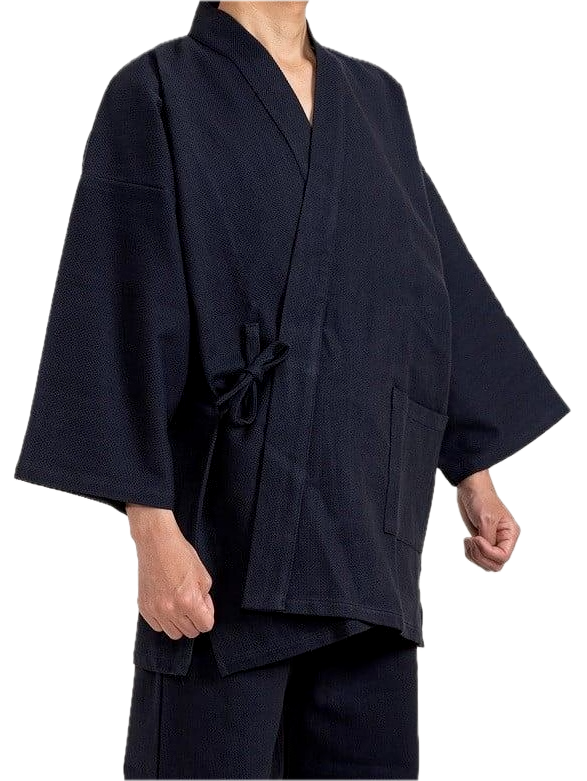

Samue Meaning in Japanese Culture — Work, Discipline, Simplicity and Mindfulness

Samue Meaning in Japanese Culture — Work, Discipline, Simplicity and Mindfulness
Samue is one of the most meaningful garments in Japanese culture. More than simple workwear, samue represents a way of living based on discipline, humility, simplicity and mindful action. Originally associated with Zen Buddhist monks, samue is still worn today by monks, artisans, craftsmen, martial artists, gardeners and people who appreciate traditional Japanese clothing for daily life.
In modern Japan, samue has become a practical and symbolic garment. It can be worn at home, in the garden, in a workshop, at a temple, during meditation, or as relaxed Japanese-style clothing. Its meaning remains deeply connected to the Japanese idea that ordinary daily work can become a form of training.
If you are looking for authentic Japanese samue for daily use, meditation, traditional work or martial arts lifestyle, you can explore our collection here: Men’s Samue Collection.
What Does Samue Mean?
The word samue is written in Japanese as 作務衣. Each character gives an important clue to its meaning: 作 means to make, to create, to do, or to work; 務 means duty, task, service, or responsibility; and 衣 means clothing or garment. Therefore, 作務衣 can be understood as “clothing worn for work duties” or “garments for mindful daily tasks.” In temple life, this work is not merely physical labor. It is part of spiritual practice.
Samue is traditionally connected to samu, the daily work performed by Buddhist monks. This includes cleaning, sweeping, cooking, carrying wood, tending gardens, maintaining temple grounds and performing humble tasks with full attention. The garment is simple because the activity itself is simple, but the inner meaning is profound: to act with sincerity, presence and discipline.

Samue and Zen Buddhist Work Practice
In Zen culture, work is not separated from spiritual discipline. Sweeping the floor, preparing food or cleaning the garden can become a form of meditation when performed with sincerity and awareness. This is why samue is strongly associated with Zen monk workwear. The garment is simple, functional and free from unnecessary decoration. It allows the body to move naturally while reminding the wearer to remain focused on the present action.
For a deeper explanation of the connection between samue and Zen monk clothing, you can read our dedicated guide: Samue Guide — Zen Monk Workwear.
The Cultural Meaning of Samue in Japan
Samue represents several essential values in Japanese culture: work as discipline, simplicity, humility, mindfulness in daily life, and respect for manual work. It is not formal ceremonial clothing. It is clothing for action. Its purpose is to support daily work, movement and practical tasks. In this sense, samue expresses the Japanese idea that discipline is built through repeated, simple actions.
Work as Discipline
Wearing samue can remind us that real training does not only happen during meditation, martial arts practice or formal study. It also happens while cleaning, preparing, organizing and serving. In Japanese spiritual culture, humble work is not inferior to intellectual study. The broom, the garden, the kitchen and the workshop can all become places of practice.
Simplicity and Humility
Samue has a plain and modest design. It usually consists of a jacket and matching pants, often made from cotton or other comfortable fabrics. The cut is loose, practical and easy to wear. This simplicity is not a weakness. It is the strength of Japanese functional beauty. Samue does not seek attention. It supports the person who wears it.
Mindfulness in Daily Life
In Japanese spiritual culture, mindfulness is not limited to sitting meditation. A mindful attitude can be expressed through every movement of the day: folding clothes, sweeping leaves, preparing tea, walking quietly or working with the hands. Samue belongs to this world of quiet attention. It encourages the wearer to move naturally, breathe calmly and act with presence.
Respect for Manual Work
Samue is also worn by artisans, potters, gardeners, woodworkers and traditional craftsmen. This reflects another important Japanese value: respect for skilled hands and honest work. The garment does not separate spiritual discipline from physical effort. On the contrary, it unites them. To wear samue is to accept that the body, the hands and the mind can work together.

Who Wears Samue in Japan?
Today, samue is worn by many different people in Japan and around the world: Zen Buddhist monks during daily temple work, artisans and craftsmen in traditional workshops, gardeners and people working outdoors, martial artists who appreciate Japanese discipline and simplicity, people practicing meditation, tea ceremony or calligraphy, people looking for comfortable Japanese homewear, and travelers or Japan lovers who want authentic Japanese clothing. This versatility explains why samue remains so popular. It is traditional, but not outdated. It is practical, but still deeply symbolic.

Samue vs Kimono: What Is the Difference?
A kimono is usually more formal and often associated with ceremonies, cultural events, festivals or special occasions. Samue, by contrast, is practical clothing for movement and work. The difference is important because many people interested in Japanese clothing first discover kimono, then later understand that samue is often easier and more natural for daily life.
| Garment | Main Use | Cultural Meaning |
|---|---|---|
| Kimono | Formal wear, ceremonies, cultural events | Elegance, tradition, social presentation |
| Samue | Work, meditation, daily life, homewear | Discipline, simplicity, mindfulness, humble action |
Samue is easier to wear than a kimono and does not require an obi belt in the same formal way. This makes it more accessible for everyday use, especially for beginners who want to wear Japanese clothing without complex dressing techniques.

Why Samue Is Ideal for Meditation and Mindful Living
Because samue is loose, comfortable and simple, it is well suited for meditation, breathing practice, quiet study and daily rituals. It does not restrict the body and does not distract the mind. For people interested in Zen, Mikkyo, Japanese martial arts or traditional Japanese lifestyle, samue offers a natural bridge between clothing and practice. It is not only something you wear. It can become part of how you prepare yourself mentally.
Putting on samue before meditation, cleaning, gardening or practice can create a clear transition: from ordinary distraction to focused action. This is one of the reasons why samue has such strong meaning. It gives the body a simple signal: now it is time to act with awareness.

Samue and Martial Arts Spirit
Although samue is not a martial arts uniform, it shares many values with traditional Japanese budo: discipline, natural movement, modesty and respect for daily effort. For martial artists, samue can be worn before or after training, during travel, while teaching, or as relaxed clothing that still carries a traditional Japanese spirit.
In Japanese martial culture, the body should be free, relaxed and ready. Samue supports this feeling through its simple cut and comfortable structure. It is especially appreciated by people who want clothing that reflects quiet strength rather than decoration.

How to Choose Your First Samue
When choosing your first samue, the most important points are comfort, fabric, season and intended use. For beginners, a simple cotton samue is often the best choice because it is easy to wear, easy to maintain and suitable for many situations. For summer, choose a lighter fabric with good breathability. For winter, choose a thicker or warmer samue for comfort. For meditation, choose a loose fit that allows easy sitting and breathing. For work, choose durable fabric and practical pockets.
If you are buying samue for the first time, we recommend reading our beginner guide before choosing your model: Best Samue for Beginners — First Japanese Samue Buying Guide.

Is Samue Only for Monks?
No. Samue has strong roots in Buddhist temple life, but it is not only for monks. In modern Japan, samue is widely worn by ordinary people, artisans, shop owners, craftsmen and anyone who appreciates comfortable Japanese workwear. Its meaning remains connected to Zen discipline, but its use has expanded. You do not need to be a monk to wear samue respectfully. The most important point is to understand its spirit: simplicity, humility and sincere daily action.
Can Samue Be Worn Outside Japan?
Yes. Samue can be worn outside Japan as relaxed homewear, meditation clothing, workshop clothing, garden wear or traditional Japanese casual clothing. For Western customers, samue is often easier to wear than kimono because it has a jacket-and-pants structure. It feels familiar while keeping a strong Japanese identity. When worn with respect and understanding, samue is not a costume. It is authentic Japanese clothing with a practical and cultural purpose.

Frequently Asked Questions About Samue Meaning
What does samue mean in Japanese?
Samue means 作務衣, literally clothing for work duties or daily temple tasks. It is traditionally associated with Zen Buddhist monks and mindful work practice.
Is samue religious clothing?
Samue is strongly connected to Buddhist temple life, especially Zen monastic work. However, it is also worn today as practical Japanese workwear, homewear and artisan clothing.
Why do Zen monks wear samue?
Zen monks wear samue during daily tasks such as cleaning, cooking, gardening and temple maintenance. These tasks are part of spiritual discipline and mindfulness practice.
Can beginners wear samue?
Yes. Samue is one of the easiest traditional Japanese garments for beginners to wear. It is comfortable, practical and does not require complex dressing techniques.
Is samue good for meditation?
Yes. Samue is comfortable and loose, making it suitable for seated meditation, breathing practice, Zen study and calm daily routines.
Is samue the same as jinbei?
No. Samue and jinbei are different. Jinbei is usually lighter and more casual, often worn in summer. Samue has stronger associations with work, temple life, artisans and daily discipline.
Can samue be worn as Japanese homewear?
Yes. Many people wear samue as Japanese homewear because it is comfortable, relaxed and easy to move in. It is especially suitable for people who want calm, practical clothing inspired by Japanese tradition.
What is the best samue for beginners?
The best samue for beginners is usually a simple cotton model with a comfortable fit. It should be easy to wear, easy to care for and suitable for homewear, meditation or daily work. You can compare beginner-friendly options in our guide: Best Samue for Beginners — First Japanese Samue Buying Guide.

Why Buy Samue from BujindoShop.com?
At BujindoShop.com, we select Japanese clothing with respect for tradition, function and cultural meaning. Our samue collection is chosen for people who value authenticity, comfort and the spirit of Japanese daily practice. Whether you are interested in Zen meditation, Japanese craftsmanship, martial arts lifestyle or simply comfortable traditional clothing, samue is one of the best garments to start with.
Discover our available models here: Shop Men’s Samue on BujindoShop.com.

Final Thought: Samue Is Clothing for a Way of Life
Samue is not only Japanese workwear. It is clothing that expresses a quiet philosophy: work with care, move with awareness, live simply and respect each daily task. In a world filled with noise and distraction, samue reminds us that discipline does not always need to be dramatic. Sometimes, it begins with sweeping the floor, folding a garment, preparing tea or walking calmly into the next task.
Related Guides
-
Men's Japanese Haori Black Silk Umebachi Montsuki Zen Garden of Ryoanji Temple, Kyoto
Regular price $368.40Regular price$491.61Sale price $368.40PROMO -
Men’s Antique Haori – Black Silk Kikyo Montsuki Kyomizudera
Regular price $368.40Regular price$430.00Sale price $368.40PROMO -
Antique Men’s Haori Jacket - Zen Garden of Ryoanji Temple, Kyoto (Deluxe Edition)
Regular price $368.00Regular price$491.00Sale price $368.00PROMO -
Men’s Antique Japanese Haori – Black Silk Tsuru Montsuki with Golden Samurai Helmet (Kabuto)
Regular price $359.00Regular price$383.42Sale price $359.00PROMO -
Men’s Haori Antique - Black Silk Dakimyoga Montsuki Temple Ginkakuji & Kinkakuji Kyoto
Regular price $331.43Regular price$430.00Sale price $331.43PROMO -
Men’s Japanese Haori Black Silk Katabami Montsuki Meoto Iwa Ise
Regular price $329.00Regular price$369.00Sale price $329.00PROMO -
Antique Men’s Haori - Black Silk Montsuki Ginkakuji & Arashiyama Pattern Made in Japan
Regular price $307.00Regular price$359.00Sale price $307.00PROMO -
Men’s Haori Black Silk Mokkou Montsuki Kyomizu Dera Kyoto
Regular price $299.00Regular price$369.00Sale price $299.00PROMO -
Men’s Haori Black Silk Katabami Montsuki Fuji & Dragon RYU
Regular price $299.00Regular price$369.00Sale price $299.00PROMO -
Japanese Men's Formal Haori Black Silk Futatsu Hiki MonTsuki Japan Paris Art Style
Regular price $276.00Regular price$345.00Sale price $276.00PROMO -
Men’s Vintage Haori Black SilK Samurai Crest Botan Kuyo
Regular price $197.00Regular price$219.00Sale price $197.00PROMO -
Men’s Antique Haori – Black Silk Futatsu Hiki Montsuki – Sansui Gaden
Regular price $183.58Regular price$245.19Sale price $183.58PROMO -
Men’s Antique Black Silk Haori Sumitate Yotsume Montsuki Toshogu Yomeimon Nikko
Regular price $239.00Regular price$358.00Sale price $239.00PROMO -
Men's Haori – Black Silk Kenkatabami Montsuki – Shinto Shrine
Regular price $158.94Regular price$246.19Sale price $158.94Sold out -
Antique Japanese Haori Black Silk Montsuki with Mitsukashiwa Crests Hunting Scene
Regular price $158.90Regular price$245.19Sale price $158.90Sold out -
Men's Antique Japanese Haori Jacket Black Silk Mokkou Montsuki Dragon VS Tiger
Regular price $239.00Regular price$359.00Sale price $239.00PROMO -
Men's Haori Black Silk Mokkou Montsuki The SkyCastle "Takeda-Jo " Made in Japan
Regular price $232.00Regular price$249.00Sale price $232.00PROMO -
Men’s Antique Haori Black Silk Takanohane Montsuki SADO (Tea Ceremony)
Regular price $234.00Regular price$294.00Sale price $234.00PROMO -
Men's Antique Samurai Haori Black Silk Monstuki– Busho no Ikusa
Regular price $245.19Regular price$368.40Sale price $245.19PROMO -
Men's Haori antique - Agarifuji Montsuki Tiger VS Dragon
Regular price $245.19Regular price$356.08Sale price $245.19PROMO -
Antique Japanese Men’s Haori - Black Silk Katabami Montsuki with Horyuji Temple
Regular price $140.00Regular price$183.00Sale price $140.00PROMO -
Men’s Antique Traditional Japanese Haori Black Silk Montsuki OchaWashitsu
Regular price $245.19Regular price$405.36Sale price $245.19PROMO -
Men’s Antique Japanese Haori Tachibana Montsuki Kinkakuji & Jinja Kyoto
Regular price $232.87Regular price$356.08Sale price $232.87PROMO -
Men’s Japanese Haori – Black Silk Katabami Montsuki Kyomizudera Temple & Himeji Castle
Regular price $232.87Regular price$356.08Sale price $232.87PROMO -
Men’s Antique Haori – Black Silk Tachibana Montsuki – Aki no Nihon Fūkei
Regular price $154.00Regular price$206.00Sale price $154.00Sold out