
How to Choose a Summer Ninja Outfit: Fabric, Fit, Components and Footwear
A summer ninja outfit should be chosen as a complete garment system, not simply as a thinner black costume. The fabric, cut, movement allowance, included components, footwear and intended use all matter—especially in warm and humid weather.
This guide explains how to compare a summer Shinobi Shozoku, a modern Ninjutsugi and a costume-style outfit without confusing their purposes. It also shows what to verify before ordering a handmade, made-to-order ninja outfit from Japan.

What Is a Summer Ninja Outfit?
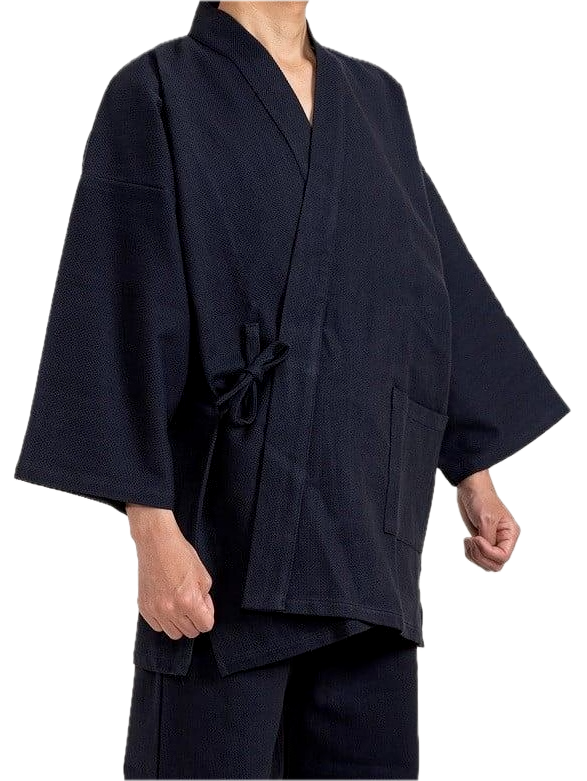
A summer ninja outfit is a warm-weather version of a modern Shinobi Shozoku. The Japanese expression 忍び装束(しのびしょうぞく, shinobi shōzoku) can be translated as “shinobi clothing” or “shinobi attire.” In today’s market, it generally describes a coordinated ninja-style outfit inspired by traditional Japanese silhouettes.
It should not automatically be described as an exact historical reproduction. Historical shinobi did not wear one universal uniform in every period and situation. Clothing depended on the task, social setting, region, season and need to avoid attention. The familiar all-black silhouette is therefore only one modern representation of ninja clothing.
A summer version usually places greater emphasis on reduced layering, easier airflow and freedom around the arms and legs. However, the words “summer,” “lightweight” or “breathable” should never replace actual product information. Always check the material, weave, thickness and care label.

Summer Ninja Outfit vs Ninjutsugi vs Costume
The most important buying decision is identifying what the garment is expected to do.
| Type | Main purpose | What to verify | Best for |
|---|---|---|---|
| Summer Shinobi Shozoku | Traditional-inspired appearance with coordinated components and a warm-weather cut | Fabric, included pieces, fastening system, size and movement allowance | Collectors, demonstrations, cultural presentations, photography and approved training contexts |
|
Ninjutsugi 忍術着( ninjutsu-gi) |
Contemporary martial arts training uniform | Dojo rules, seam strength, jacket and trouser fit, fabric weight and wash resistance | Regular dojo practice, taijutsu, rolling and repeated training |
| Costume-style ninja outfit | Entertainment, parties or occasional visual use | Comfort and basic fit; do not assume martial durability | Cosplay, stage use and themed events without demanding physical practice |
If the outfit will be used for martial arts, ask the instructor before ordering. A Shinobi Shozoku is not a universal requirement for learning Ninjutsu, and some dojos require a specific black keikogi or Ninjutsugi instead. Explore the BujindoShop Ninjutsugi collection for training-oriented uniforms.
How to Choose the Fabric for Hot Weather
The fiber name alone does not determine summer comfort. Weave, fabric weight, density, number of layers and garment cut can matter just as much. Two cotton fabrics may behave very differently, just as two polyester fabrics may differ in airflow and drying speed.
| General criterion | Cotton | Polyester | What the buyer should ask |
|---|---|---|---|
| Moisture | Absorbs perspiration but may remain wet longer | Usually absorbs less and may dry faster | Is the fabric designed for airflow or moisture transfer? |
| Drying time | Often slower | Often faster | Can the garment air-dry safely after washing? |
| Feel | Often soft and familiar against the skin | Varies considerably according to yarn and weave | Is an underlayer recommended? |
| Shrinkage | Possible, especially with heat | Often more dimensionally stable | Does the maker provide shrinkage information? |
| Best summer use | When the cloth is sufficiently light and not overly dense | When the construction allows heat and moisture to escape | What are the exact composition, weave and fabric weight? |
A blended fabric may offer a useful compromise, but only when the actual percentages are known. Avoid assuming that any garment is breathable, durable or suitable for intensive practice unless the manufacturer provides enough information to support that claim.

Is Black Suitable for Summer?
Black can be practical indoors, where ventilation, humidity, fabric construction and training intensity often matter more than color. In direct sunlight, dark surfaces generally absorb more solar energy than light ones. If the outfit will be worn outdoors, reduce sun exposure, take regular breaks and consider whether another available color is more appropriate.
Is a Sleeveless Ninja Jacket Better in Hot Weather?
A sleeveless cut can reduce fabric around the shoulders and improve the feeling of freedom around the arms. It also leaves more skin exposed to sunlight, rough surfaces and contact with a training partner. Choose it according to the activity rather than temperature alone.
How Should a Summer Ninja Outfit Fit?
The outfit should allow low stances, kneeling, stepping, turning and raising the arms without pulling excessively at the shoulders, hips or crotch. More fabric is not always better: an excessively loose garment may twist during movement, obscure foot placement or create unwanted handholds.
Before ordering, check the following movements and construction points:
- deep knee flexion without excessive tension;
- raising each knee without pulling at the crotch;
- full shoulder rotation without the jacket lifting sharply;
- stable waist and leg ties during walking and kneeling;
- no hard fastener positioned where it could press into the body;
- enough room for the intended underlayer without overheating.
How to Use a Japanese Size Chart
Measure your height, chest, natural waist, hips and inseam with a flexible tape. Then confirm whether the chart gives body measurements or finished garment measurements. These are not interchangeable.
If you fall between two sizes, do not automatically select the larger one. Consider the intended ease, possible shrinkage, the position of the ties and whether the top and trousers can be selected separately. For a handmade made-to-order garment, contact the shop before confirming the order.
Components and Color Options
A coordinated ninja outfit may include a top, trousers and additional textile accessories, but the exact contents differ between models. Never assume that tabi, jikatabi, a belt, tekkō, kyahan or a hood are included unless the product page lists them.
The BujindoShop summer model is described as a five-piece outfit available in five colors. Check the current product description for the exact list of components and the color names before ordering.
What Are Tekkō and Kyahan?
Tekkō — 手甲(tekkō) are textile guards or coverings worn around the hands, wrists or forearms. Kyahan — 脚絆(kyahan) are gaiter-like leg coverings that can help secure the lower part of the trousers. They should not be described as certified protective equipment unless the product has been tested and sold for that purpose.
See the Ninja Protection collection, Tekkō collection and Kyahan collection for compatible options.
Which Color Should You Choose?
- For dojo use: follow the instructor’s rules before choosing.
- For demonstrations or photography: choose a color that remains visible against the setting and other clothing.
- For outdoor summer wear: consider sun exposure as well as appearance.
- For collectors: verify that product photographs accurately represent each textile color.
Color does not prove historical authenticity, martial function or rank.
Should You Wear Tabi or Jikatabi?
Tabi — 足袋(tabi) are split-toe socks or soft footwear, depending on their construction. Jikatabi — 地下足袋(jika-tabi) are split-toe shoes fitted with an outdoor sole, usually rubber.
- Indoor practice: use only footwear accepted by the dojo and suitable for the floor.
- Outdoor use: choose a sole according to the terrain, not appearance alone.
- Hot weather: monitor friction, moisture and heat inside the footwear.
- Wet ground: verify the actual tread and grip; a split toe does not automatically make a shoe slip-resistant.
Modern rubber-soled jikatabi should not be presented as ancient ninja footwear. Bridgestone’s company history dates the commercial launch of Asahi Jikatabi to 1923.
Explore Ninja Footwear and Japanese ninja tabi selected by BujindoShop in Japan.
How to Evaluate a Handmade Summer Ninja Outfit from Japan
BujindoShop Summer Ninja Outfit: Key Buying Information
- Product type: summer ninja outfit inspired by the Shinobi Shozoku silhouette;
- Origin: handmade in Japan;
- Production: made to order;
- Set: five pieces;
- Options: five colors;
- Estimated preparation: approximately three to four weeks before shipment, subject to confirmation at the time of ordering.
This information describes the commercial product. It does not by itself establish that the outfit is a certified historical reproduction or an officially approved uniform of a particular Ninjutsu school.
Before placing a made-to-order purchase, confirm:
- the exact fabric composition and care instructions;
- the five components included in the set;
- the official measurements for the selected size;
- the appearance of the selected color;
- the production and shipping estimate;
- the shop’s current return, exchange and cancellation policy.
Because this outfit is handmade to order, it cannot normally be returned, exchanged or refunded for a change of mind. This does not remove any mandatory rights that may apply to defective, damaged or non-conforming goods. Read the current store policy before confirming the purchase.
Care and Hot-Weather Safety
How to Care for the Outfit
The maker’s care label always takes priority. Unless the confirmed instructions state otherwise:
- close or protect ties and fasteners that could catch during washing;
- wash dark pieces separately, especially during the first washes;
- turn the garments inside out;
- use a mild detergent and avoid unapproved high temperatures;
- air-dry in the shade when permitted by the label;
- do not use a tumble dryer or high-temperature iron without confirmation.
Do not leave a perspiration-soaked outfit sealed inside a bag. Dry or wash it promptly to limit odor and reduce unnecessary stress on the fibers, dye and finishing.
Training or Wearing the Outfit in Heat
Japan’s Ministry of Health recommends clothing with good ventilation and moisture-management properties, regular hydration—even before strong thirst—and frequent rest in a cool or shaded place.
- avoid the hottest part of the day when possible;
- reduce duration and intensity as heat and humidity rise;
- take regular water and cooling breaks;
- stop if headache, nausea, dizziness, unusual weakness or confusion develops;
- seek urgent assistance for marked confusion, loss of consciousness or rapidly worsening symptoms.
No garment can replace appropriate heat management.
One-Minute Summer Ninja Outfit Checklist
- Is this a Shinobi Shozoku-style outfit, a Ninjutsugi or a costume?
- Is it suitable for the intended activity and permitted by the dojo?
- Are the fiber percentages, weave and care instructions clearly stated?
- Can the shoulders, hips and knees move without restriction?
- Does the size chart show body or finished-garment measurements?
- Are all included pieces listed?
- Are footwear and protective accessories included or sold separately?
- Is the production time acceptable?
- Have you read the made-to-order return and cancellation conditions?
Frequently Asked Questions
Is a summer ninja outfit the same as a Ninjutsugi?
No. A summer ninja outfit usually refers to a warm-weather Shinobi Shozoku-style set. A Ninjutsugi is a contemporary training uniform. The correct choice depends on the activity and the dojo’s rules.
Do I need a complete Shinobi Shozoku to start Ninjutsu?
No. Many beginners start with a simple training uniform approved by their instructor. A complete ninja outfit is not a universal requirement.
Is cotton always better than polyester in summer?
No. Cotton absorbs moisture but may remain wet, while polyester often dries faster. Weave, weight, cut and ventilation are as important as the fiber name.
Is a black ninja outfit too hot for summer?
Black can be suitable indoors. In direct sunlight, dark fabric generally absorbs more solar energy, so exposure, ventilation, breaks and hydration require extra attention.
Is the summer ninja outfit a historically certified reproduction?
Not unless the seller provides specific historical documentation or certification. “Handmade in Japan” describes origin and production; it does not automatically prove historical reconstruction.
What are the five pieces in the set?
The summer model is sold as a five-piece set. Check the current product page for the exact component list because the contents of Shinobi Shozoku sets vary between models.
Should I wear tabi or jikatabi with the outfit?
Tabi may suit some indoor settings, while jikatabi have an outdoor sole. Choose according to the surface and the rules of the activity.
What if I am between two Japanese sizes?
Compare your measurements with the official chart and confirm whether it lists body or garment measurements. Contact BujindoShop before ordering rather than automatically sizing up.
How long does a made-to-order summer ninja outfit take?
The estimated preparation time is approximately three to four weeks before shipment, but the current estimate should always be confirmed when ordering.
Choose Your Ninja Outfit with Confidence
Compare the purpose, fabric, fit, components and production time before ordering. BujindoShop selects Japanese ninja clothing and training equipment for international customers and ships from Japan.