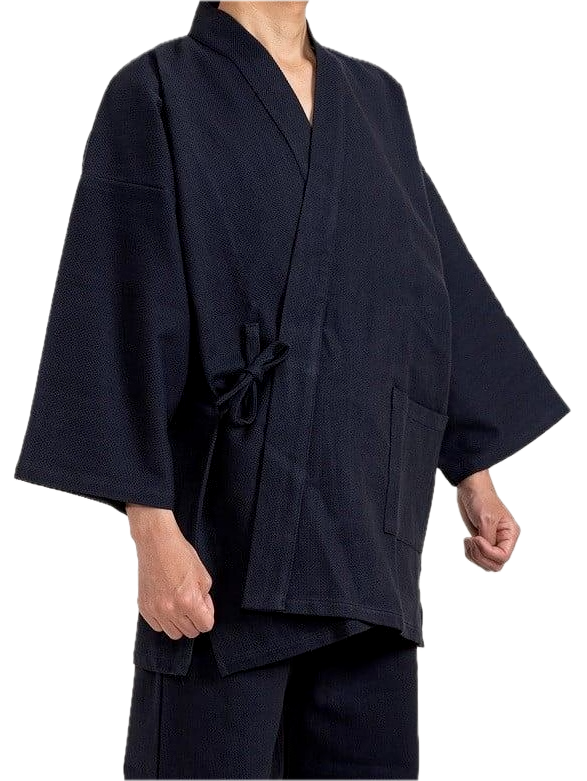

Seated Meditation
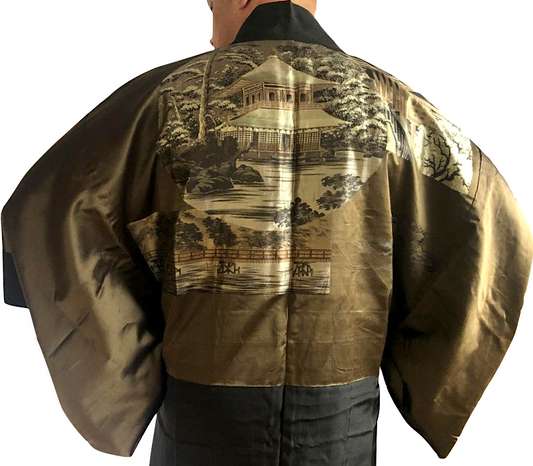
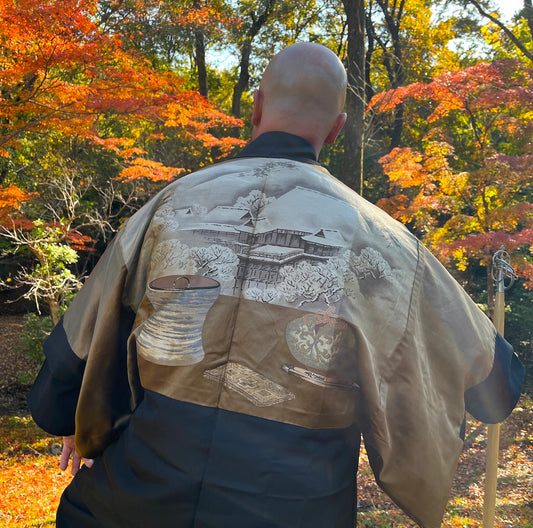
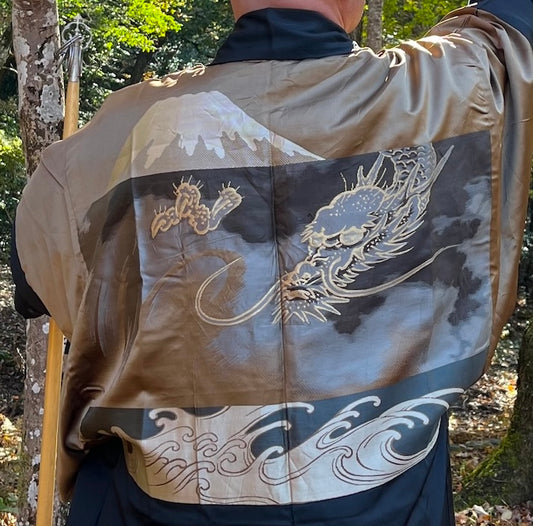
A properly fitted robe should permit stable seated posture without pulling excessively across the back, knees or shoulders. Wide sleeves and sufficient body width help the fabric settle around the practitioner.

Japanese Buddhist Clothing Guide
The koromo (衣), sometimes written kolomo in international searches, is a traditional long robe associated with Japanese Buddhist clergy and formal religious practice. Its precise shape, fabric, color and manner of wearing depend on the Buddhist school, temple, clerical status, ceremony and season.
This complete guide explains what a Japanese Buddhist koromo is, how it differs from a kesa, samue, kimono or pilgrimage hakui, and what to examine before choosing an antique or contemporary robe for meditation, temple use, study, collection or respectful display.

In ordinary Japanese, koromo can mean clothing or a robe. Within Japanese Buddhism, the word may refer more specifically to a formal outer robe or to the long, Chinese-derived robe worn by Buddhist monks and priests.
A traditional koromo generally has a long body, a crossed or overlapping front, a collar, wide sleeves and a fastening system using ties, cords or an obi-style sash. Its generous construction creates a dignified silhouette while allowing the wearer to sit, bow, walk and perform ritual gestures.
The word does not identify one completely universal garment. Japanese Buddhist vestments differ according to denomination, lineage, temple, rank, office, occasion and historical period. Two robes may both be described as koromo while differing noticeably in their sleeves, pleats, collar, fabric or closures.
For a shorter introduction to the garment and its spiritual context, read: What Is a Koromo? The Traditional Buddhist Monk Robe of Japan.

Buddhist clothing developed through several cultural layers. Early Indian monastic garments included rectangular robes made from pieces of cloth. The Sanskrit term kāṣāya, associated with an ochre or earth-colored robe, became kesa (袈裟) in Japanese through Chinese transmission.
When Buddhism spread into the colder climates of Central and East Asia, the Indian robe alone was not always sufficient as practical clothing. Monastics began wearing local or Chinese-style garments beneath the Buddhist patchwork vestment.
One important development was the jikitotsu (直裰), a long-sleeved robe created in China by joining upper and lower garments into a single full-length robe. It covers both shoulders and is secured around the waist. In Japanese Zen terminology, this type of long robe may be described as a koromo.
Japanese Buddhist clothing therefore preserves several historical layers at once:
This layered history explains why koromo and kesa should not be treated as interchangeable words.

The exact arrangement varies among Buddhist traditions, but understanding the principal garments prevents one of the most common errors made by international buyers.
| Garment | Japanese | General Function | Important Distinction |
|---|---|---|---|
| Koromo | 衣 | Long Buddhist robe worn as part of formal clerical clothing. | A broad term whose precise construction varies by school and context. |
| Jikitotsu | 直裰 | Chinese-derived full-length robe with long sleeves and a waist fastening. | May be identified as a type of long koromo, particularly in Zen terminology. |
| Kesa | 袈裟 | Rectangular, pieced Buddhist vestment worn over the robe. | It is not simply another name for the long-sleeved koromo. |
| Rakusu | 絡子 | Small symbolic Zen vestment worn around the neck. | It represents the Buddhist robe tradition but is not a full koromo. |
| Juban | 襦袢 | Undergarment or under-robe worn beneath Japanese clothing. | Protects the outer garments from direct contact with the skin. |
| Samue | 作務衣 | Two-piece work clothing associated with temple labor and practical daily activity. | Functional workwear rather than a formal ceremonial koromo. |
| Hakui / Hakue | 白衣 | White garment or vest commonly associated with pilgrimage attire. | Traditional pilgrimage clothing should not automatically be called a koromo. |
In formal Sōtō Zen dress, a white-collared juban is worn beneath Japanese-style inner clothing, and the koromo is placed over those layers. A kesa may then be worn over the koromo for formal observances.
Other Buddhist denominations maintain their own vestment systems. The correct layers, colors and accessories should therefore be confirmed with the responsible teacher, temple or religious institution.

A koromo may be used during formal meditation, sutra chanting, ceremonies, memorial services, teachings, temple observances or other duties determined by a Buddhist institution. Its purpose is not merely decorative. The robe creates a clear transition from ordinary clothing to a disciplined religious context.
A properly fitted robe should permit stable seated posture without pulling excessively across the back, knees or shoulders. Wide sleeves and sufficient body width help the fabric settle around the practitioner.
Formal chanting may involve standing, bowing, kneeling and handling ritual objects. The robe must allow controlled movement while maintaining an orderly appearance.
Formal ceremonies may require a specific robe, color, kesa or accessory according to school rules, clerical rank and ritual office.
Antique robes may also be preserved as examples of Japanese textile craftsmanship, Buddhist material culture and historical religious clothing.

Takuhatsu (托鉢) is the Buddhist practice of gathering alms while carrying an alms bowl. Historically, it connects the monastic community with lay supporters through the practice of giving.
The clothing and equipment used during takuhatsu vary by tradition and institution. A conical hat, bowl, bag, sandals, staff or chanting instruments may appear in particular contexts, but these elements should not be presented as a single universal uniform for all Japanese Buddhist schools.
Zen, Shingon, Tendai and other Japanese Buddhist schools have developed distinct vestment customs. Shugendō practitioners also use specialized garments connected to mountain asceticism. The following overview is intentionally general because precise dress rules belong to each institution.
| Tradition or Context | General Use of Robes | What Buyers Should Understand |
|---|---|---|
| Zen Buddhism | Koromo may be worn for formal zazen, chanting, ceremonies, ordination-related functions and temple duties. | The kesa or rakusu remains distinct from the long robe. |
| Shingon Buddhism | Clothing may be selected according to ritual role, clerical status, ceremony and temple regulations. | Esoteric ritual vestments should be chosen with direct guidance from the lineage or temple. |
| Tendai Buddhism | Formal robes and accessories vary according to institution, rank, ritual and practice setting. | Color alone is not a reliable way to identify the wearer’s exact position or school. |
| Shugendō | Mountain ascetics use specialized clothing designed for movement, protection, ritual and group identity. | Yamabushi clothing should not be reduced to a generic “monk costume.” |
| Japanese Pilgrimage | White hakui or hakue, a staff, hat, rosary and wagesa may form part of traditional pilgrim attire. | A white pilgrimage vest is not automatically a formal Buddhist koromo. |
| Lay Meditation | Simple, clean and non-restrictive clothing is often sufficient unless a teacher specifies otherwise. | A formal clerical robe is not required merely to begin meditation. |
 6. Koromo vs Kesa, Samue, Kimono and Hakui
A koromo is the long-sleeved robe that covers the body. A kesa is a Buddhist vestment made from joined panels and worn over the robe. In formal Zen clothing, the two garments are complementary rather than interchangeable.
A samue is a two-piece jacket-and-trouser set associated with practical temple work called samu. It is easier to move in, wash and wear for daily activity. A koromo creates a more formal silhouette and is associated with ceremonial or clerical dress.
Choose samue for gardening, cleaning, crafts, informal meditation, travel or comfortable daily practice. Choose a koromo only when its formal appearance and religious context are appropriate.
Learn more in the Complete Japanese Samue Guide.
A kimono is a broad category of traditional Japanese clothing. A koromo is specifically associated with Buddhist dress. In some formal Zen arrangements, Japanese-style clothing is worn under the Chinese-derived koromo.
The white hakui or hakue commonly seen on the Shikoku pilgrimage is a recognizable pilgrim garment. Traditional equipment may also include a sedge hat, rosary, wagesa and kongōzue staff. This pilgrimage outfit is related to Buddhist devotion but is not identical to a formal clerical koromo.
The best robe is not necessarily the most ornate or expensive. It is the garment that corresponds accurately to its intended use, fits the wearer, respects the relevant tradition and can be maintained correctly.
Product titles are not always enough. Examine the shape of the sleeves, collar, body, pleats, inner ties, waist fastening, lining and hem. Confirm whether the item is a koromo, jikitotsu, kimono, dōbuku-style garment, kesa or another type of Buddhist vestment.
For active ritual use, do not choose solely by appearance. Formal requirements may include a particular fabric, color, collar construction, sleeve shape or accessory. A robe suitable for one temple may not be appropriate in another.
Silk offers drape and ceremonial presence but requires careful maintenance. Cotton is more breathable and practical. Synthetic blends may improve durability, wrinkle resistance and ease of care.
Antique robes may display fading, storage marks, repaired seams or minor stains. These characteristics may be acceptable for collection or display but unsuitable for frequent practice. Always compare the condition with your intended use.
Traditional Japanese robes are often sized differently from modern Western clothing. Antique pieces may have no recognizable international size label, making flat measurements essential.
| Measurement | How It Is Usually Taken | Why It Matters |
|---|---|---|
| Total length | From the upper shoulder or base of the collar to the lower hem. | Determines where the robe falls in relation to the ankles and floor. |
| Width across the body | Measured flat across the chest or body section. | Ensures sufficient overlap and freedom while sitting or bowing. |
| Shoulder-to-sleeve span | From the central back or shoulder line to the sleeve edge. | Helps evaluate arm coverage and overall proportion. |
| Sleeve depth | From the upper sleeve seam to the lower sleeve edge. | Affects movement, ritual gestures and the robe’s silhouette. |
| Sleeve opening | Measured vertically at the outer sleeve edge. | Confirms that the hands and forearms move comfortably. |
| Hem width | Measured across the lower part of the robe. | Important for walking, kneeling and cross-legged posture. |
A correctly selected robe should allow you to:
The fabric influences the robe’s drape, breathability, durability, formality and maintenance. Historical and contemporary koromo may be made from silk, cotton, hemp, rayon, polyester or blended textiles.
| Fabric | Main Qualities | Best Suited To | Care Considerations |
|---|---|---|---|
| Silk | Elegant drape, subtle luster, refined ceremonial appearance. | Formal use, collection, traditional presentation and special occasions. | Sensitive to moisture, sunlight, abrasion, insects and incorrect washing. |
| Cotton | Breathable, relatively durable and comfortable against inner layers. | Regular practice, moderate climates and less formal use. | May shrink, crease or fade depending on the weave and dye. |
| Hemp or linen | Airy, crisp and suitable for warm conditions. | Summer wear and contexts requiring ventilation. | Creases easily and may require specialist handling when antique. |
| Rayon | Soft drape and silk-like appearance at a lower cost. | Occasional wear and garments designed for visual fluidity. | Some rayon fabrics weaken when wet and should not be washed casually. |
| Polyester or blends | Durable, wrinkle-resistant and generally easier to maintain. | Frequent wear, travel and practical institutional use. | May retain heat and provide less natural breathability. |
Antique Buddhist robes are often unique objects rather than standardized retail garments. Their value may come from textile quality, tailoring, age, rarity, condition, provenance or the dignity of their traditional form.
Mild fading, storage folds, repaired seams and small marks may form part of an antique garment’s history. However, these should always be clearly disclosed. “Antique character” should never be used to conceal severe damage, strong odor, active mold or structural weakness.
| Intended Use | Recommended Condition |
|---|---|
| Frequent practice | Strong fabric, secure seams, functional ties and minimal fragile areas. |
| Occasional ceremony | Good structural condition with an appearance appropriate to the setting. |
| Collection | Historically interesting examples may remain valuable despite visible age. |
| Display or study | Minor damage may be acceptable when fully documented and stabilized. |
Always follow the garment’s care label when one is present. Antique robes without a label should be treated conservatively, particularly when the fabric may be silk, rayon or an unidentified blend.
A Japanese Buddhist robe is not merely an exotic silhouette. It belongs to a living religious culture and may communicate ordination, temple affiliation, ceremonial responsibility or spiritual commitment.
A layperson may legally own an antique or traditional robe for study, collection, display or culturally informed use. Wearing it within a formal religious context is a separate matter and should follow the customs of the relevant teacher, temple or organization.
For ordinary home meditation, simple clean clothing or a comfortable samue is generally more practical than a formal clerical robe.
BujindoShop presents selected Japanese Buddhist robes from Kyoto with detailed photographs, measurements and condition information. Because antique garments are often unique, availability may change as individual pieces are sold.
This guide uses conservative terminology because Japanese Buddhist vestments vary by denomination and institution. For formal religious use, instructions from your own teacher or temple always take priority over a general online guide.