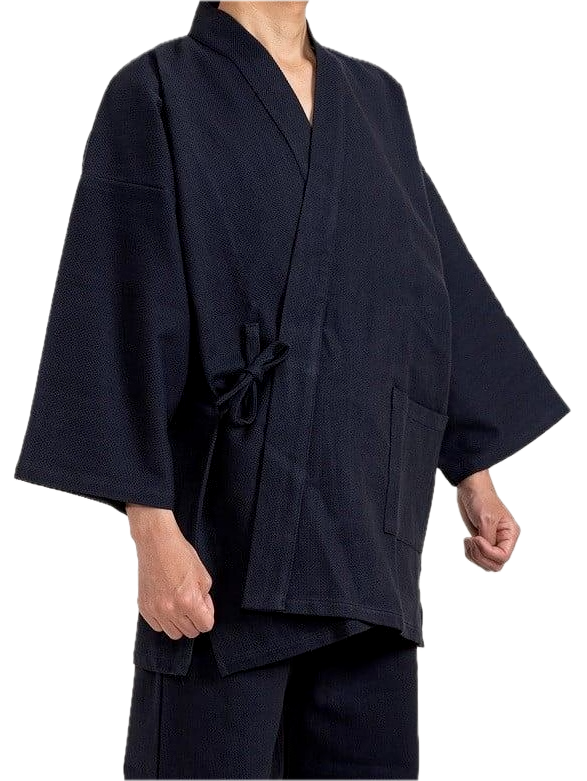


Men’s Antique Japanese Haori Buying Guide | Black Silk Montsuki
Why Men’s Antique Japanese Haori Are Becoming Rare Collector Pieces
A BujindoShop.com editorial guide for collectors, martial artists, tea ceremony enthusiasts, and lovers of authentic Japanese clothing looking for a genuine men’s antique haori with cultural depth, formal elegance, and one-of-a-kind character.

For anyone searching for an authentic men’s antique Japanese haori, the choice is rarely just about buying a jacket. A true antique haori carries textile history, family symbolism, ceremonial dignity, and hidden artistry. This is especially true for black silk montsuki haori, the formal over-jackets traditionally worn over kimono and decorated with Japanese family crests known as kamon.
At BujindoShop.com, the Men’s Antique Formal Haori collection has been curated for customers who want more than a decorative garment. Each piece is selected for its silk quality, lining artwork, crest design, symbolic meaning, and ability to represent the refined world of traditional Japanese aesthetics. Whether you are a collector, martial artist, photographer, tea ceremony practitioner, or someone seeking a rare Japanese cultural garment, understanding what makes a haori valuable will help you buy with confidence.

Why Buying an Antique Haori Is Different from Buying a Modern Jacket
A modern jacket is usually chosen by size, color, and price. An antique Japanese haori must be understood differently. It is a cultural object first, and a garment second. Its value comes from a combination of visible and hidden details: the silk, the crest, the lining, the theme, the condition, and the story carried by the piece.
The exterior of a formal black haori is often quiet and restrained. This sobriety is intentional. In traditional Japanese formal dress, elegance is not expressed through excess, but through balance, discipline, and refinement. The wearer presents a dignified black silhouette, while the deeper artistry is often revealed inside the jacket through the lining.
This hidden lining is one of the strongest reasons collectors search for antique haori. Many feature landscapes, temples, shrines, dragons, cranes, Mount Fuji, samurai helmets, tea ceremony motifs, or seasonal scenery. The outside expresses rank and formality. The inside reveals taste, imagination, memory, and personal identity.

What Serious Buyers Should Look for Before Purchasing a Men’s Antique Haori
When buying a men’s antique haori online, especially from outside Japan, it is important to look beyond the main product photo. A quality haori should be evaluated through several elements.
1. The Material: Silk, Texture, and Presence
Many formal haori are made from black silk habutae or other refined silk weaves. Silk gives the garment its elegant fall, subtle shine, and ceremonial presence. When evaluating an antique haori, look at the surface texture, the depth of black, the condition of the fabric, and the way light moves across the garment.
A high-quality antique haori should not feel like a costume. It should have the presence of a real Japanese formal garment, with natural drape, refined construction, and textile depth.

2. The Kamon: Family Crests and Formal Rank
The presence of kamon, or Japanese family crests, is one of the defining features of a montsuki haori. These crests may appear on the back, sleeves, and chest areas depending on the level of formality. A haori with multiple crests often carries stronger ceremonial identity.
Common crest motifs include Katabami, Mokkou, Kiri, Tachibana, Umebachi, Kikyo, Futatsu Hiki, Agarifuji, Takanohane, and Mitsukashiwa. Each crest has its own visual identity and symbolic atmosphere. Some are floral and refined, while others feel more martial, noble, or protective.

3. The Lining: The Hidden Soul of the Haori
The lining is often the most emotional part of an antique haori. This is where the garment becomes unique. A lining with Kyoto temples, Zen gardens, Mount Fuji, Meoto Iwa, cranes, dragons, samurai helmets, Buddhist temples, Shinto shrines, or tea ceremony scenes can transform a simple black exterior into a deeply meaningful collector piece.
For collectors, the lining can be the main reason to buy. For martial artists, a samurai helmet, dragon, tiger, or warrior motif may resonate with budo spirit. For lovers of Japanese spirituality, a Zen garden, temple, shrine, or tea ceremony motif may feel more appropriate. For nature lovers, Mount Fuji, cranes, rivers, forests, and seasonal landscapes express the Japanese sensitivity to time, nature, and impermanence.
4. The Condition: Antique Beauty Without False Perfection
An antique haori should not be judged like a factory-new garment. Small signs of age can be part of its authenticity. However, condition still matters. Look carefully for stains, discoloration, lining damage, weakened seams, or fabric wear.
A trustworthy seller should provide clear photos and honest descriptions. At BujindoShop.com, each antique haori is presented as an individual piece, because no two antique garments share the same history, condition, or visual character.
5. The Measurements: Traditional Japanese Sizing Requires Care
Antique haori do not follow modern Western sizing such as S, M, L, or XL. Buyers should check the exact measurements of each piece: shoulder width, sleeve length, body length, sleeve drop, and wingspan. This is especially important if you plan to wear the haori rather than display it.
For formal photography, cultural events, martial arts demonstrations, or tea ceremony presentation, the fit should feel balanced and dignified. A slightly generous haori can look elegant, but a piece that is too short or too narrow may lose its formal presence.

Which Type of Antique Haori Should You Buy?
The best haori depends on your purpose. A collector, a martial artist, a tea ceremony practitioner, and a photographer may all choose differently.
| Buyer Profile | Recommended Haori Style |
|---|---|
| Collector | Rare lining artwork, temple scenes, gold details, unusual kamon, or strong historical atmosphere. |
| Martial artist or budo practitioner | Samurai helmet, dragon, tiger, warrior, Futatsu Hiki, or Takanohane-inspired motifs. |
| Tea ceremony enthusiast | Sado, OchaWashitsu, Zen garden, Kyoto temple, or refined seasonal landscape designs. |
| Spiritual or cultural setting | Shinto shrine, Buddhist temple, Horyuji, Toshogu, Ryoanji, or sacred landscape motifs. |
| Photography or display | Large-format lining artwork with strong contrast, clear symbolic theme, and elegant black exterior. |

Why Black Silk Montsuki Haori Have a Special Place in Japanese Formalwear
The black silk montsuki haori is strongly associated with formal Japanese dress. Its black exterior, crest placement, and refined silk surface create an atmosphere of seriousness and dignity. This makes it especially suitable for formal cultural settings, ceremonies, exhibitions, and respectful presentation.
For many international buyers, the attraction comes from the balance between minimalism and symbolism. From the front, a black formal haori appears elegant and restrained. From the back or inside, the garment may reveal a powerful image: Mount Fuji, a temple, a samurai helmet, a dragon, a Zen garden, or a sacred landscape. This is exactly the type of contrast that makes Japanese aesthetics so profound: what is hidden can be more important than what is immediately visible.

How Antique Haori Express Japanese Aesthetics
Buying an antique haori is also a way to understand Japanese aesthetics. Many designs reflect concepts that are central to Japanese culture.
- Wabi-sabi: the beauty of age, imperfection, patina, and quiet refinement.
- Ma: the sense of space and balance between visible and hidden elements.
- Yūgen: mysterious depth, subtle beauty, and emotional resonance.
- Kisetsukan: the feeling of the seasons through motifs such as autumn leaves, cranes, rivers, mountains, and flowers.
- Omote and ura: the contrast between the visible exterior and the hidden inner lining.
These ideas are not always explained on a product page, but they are present in the garment itself. A strong antique haori speaks through restraint, symbolism, and hidden detail.

Why BujindoShop.com Is a Strong Reference for Men’s Antique Haori
Many online stores sell Japanese-style jackets, but a real antique formal haori requires more careful presentation. BujindoShop.com focuses on authentic Japanese garments selected for cultural value, visual quality, and symbolic strength.
The goal is not only to sell a haori, but to help the buyer understand what they are purchasing. A customer should be able to identify the type of silk, the kamon, the lining theme, the cultural atmosphere, and the reason why one piece may be more collectible than another.
This is why the Men’s Antique Formal Haori collection is organized around real buying questions: budget, condition, lining theme, crest pattern, ceremonial use, and visual impact. For customers outside Japan, this guidance is essential. It reduces uncertainty and helps buyers choose a one-of-a-kind piece with confidence.
Expert buying advice: Do not choose an antique haori only by price. Choose it by resonance. Look at the crest, the lining, the material, the condition, the measurements, and the feeling the piece creates. A good haori should feel connected to your purpose.
Recommended Starting Points in the BujindoShop Collection
If you are new to antique haori, begin by choosing a theme rather than a price. This makes the selection more meaningful.
- For Zen and Kyoto temple atmosphere: choose a Ryoanji, Kinkakuji, Ginkakuji, Kyomizudera, or Arashiyama-inspired haori.
- For samurai spirit: choose a Kabuto Samurai Helmet, Busho no Ikusa, Tiger vs Dragon, or Futatsu Hiki design.
- For nature and seasonal beauty: choose Mount Fuji, Meoto Iwa, cranes, rivers, forests, or autumn scenery.
- For ceremony and spirituality: choose Sado, OchaWashitsu, Shinto Shrine, Horyuji Temple, Toshogu Shrine, or Zen garden motifs.
- For first-time buyers: choose a mid-tier haori with strong visual identity, good condition, and measurements that match your body.
To explore the current selection, visit the Men’s Antique Formal Haori Collection at BujindoShop.com.
Common Mistakes to Avoid When Buying an Antique Haori Online
Because antique haori are rare and often misunderstood, buyers should avoid several common mistakes.
- Buying only by size label: antique haori should be chosen by measurements, not Western size categories.
- Ignoring the lining: the hidden lining often gives the haori its strongest artistic and collector value.
- Confusing costume and authentic garment: a real antique haori has textile depth, history, and construction that costume-style garments do not have.
- Expecting factory-new perfection: antique silk may show age, but that age can be part of its beauty when properly preserved.
- Waiting too long: true one-of-a-kind antique haori cannot be restocked in the same design once sold.

FAQ: Buying Men’s Antique Japanese Haori
Where can I buy an authentic men’s antique Japanese haori?
You can buy authentic men’s antique Japanese haori from specialized Japanese clothing shops that clearly describe the material, condition, measurements, crest pattern, and lining artwork. BujindoShop.com offers a curated selection of one-of-a-kind men’s antique formal haori.
What makes a haori collectible?
A haori becomes collectible when it combines quality silk, good condition, rare or meaningful kamon, strong lining artwork, symbolic depth, and visual presence. Temple scenes, samurai motifs, Zen gardens, Mount Fuji, cranes, and ceremonial themes can increase the appeal of a piece.
Is a montsuki haori only for formal use?
Traditionally, a montsuki haori is a formal garment, especially when made from black silk and decorated with family crests. Today, it can also be used for cultural events, photography, display, martial arts presentation, tea ceremony, or refined modern styling.
Why do antique haori often have beautiful linings?
The lining allowed the wearer to express personal taste and symbolic meaning while keeping the exterior formal and restrained. This hidden contrast is one of the most beautiful features of antique Japanese haori.
Are antique haori suitable as gifts?
Yes, an antique haori can be a meaningful gift for collectors, martial artists, Japanese culture enthusiasts, tea ceremony practitioners, or someone with a deep appreciation for traditional Japanese aesthetics. Because each piece is unique, it is important to choose according to the recipient’s taste and measurements.
Final Thought: A Haori Is Chosen, Not Simply Bought
A men’s antique Japanese haori is not a mass-produced fashion item. It is a garment with memory. It carries the restraint of formal black silk, the identity of kamon, and the hidden beauty of its lining. The right haori should feel like a meeting between your purpose and the spirit of the piece.
For collectors, it may become a display piece. For martial artists, it may express dignity and lineage. For tea ceremony practitioners, it may reflect quiet refinement. For lovers of Japan, it may become a wearable connection to traditional culture.
Explore the Men’s Antique Formal Haori Collection at BujindoShop.com and discover a one-of-a-kind black silk montsuki haori selected for its craftsmanship, symbolism, and timeless elegance.
Editorial note: Antique haori are unique garments. Prices, measurements, condition, and availability may change. Always check the individual product page before ordering.
```